
What Does Direct Deposit Mean?
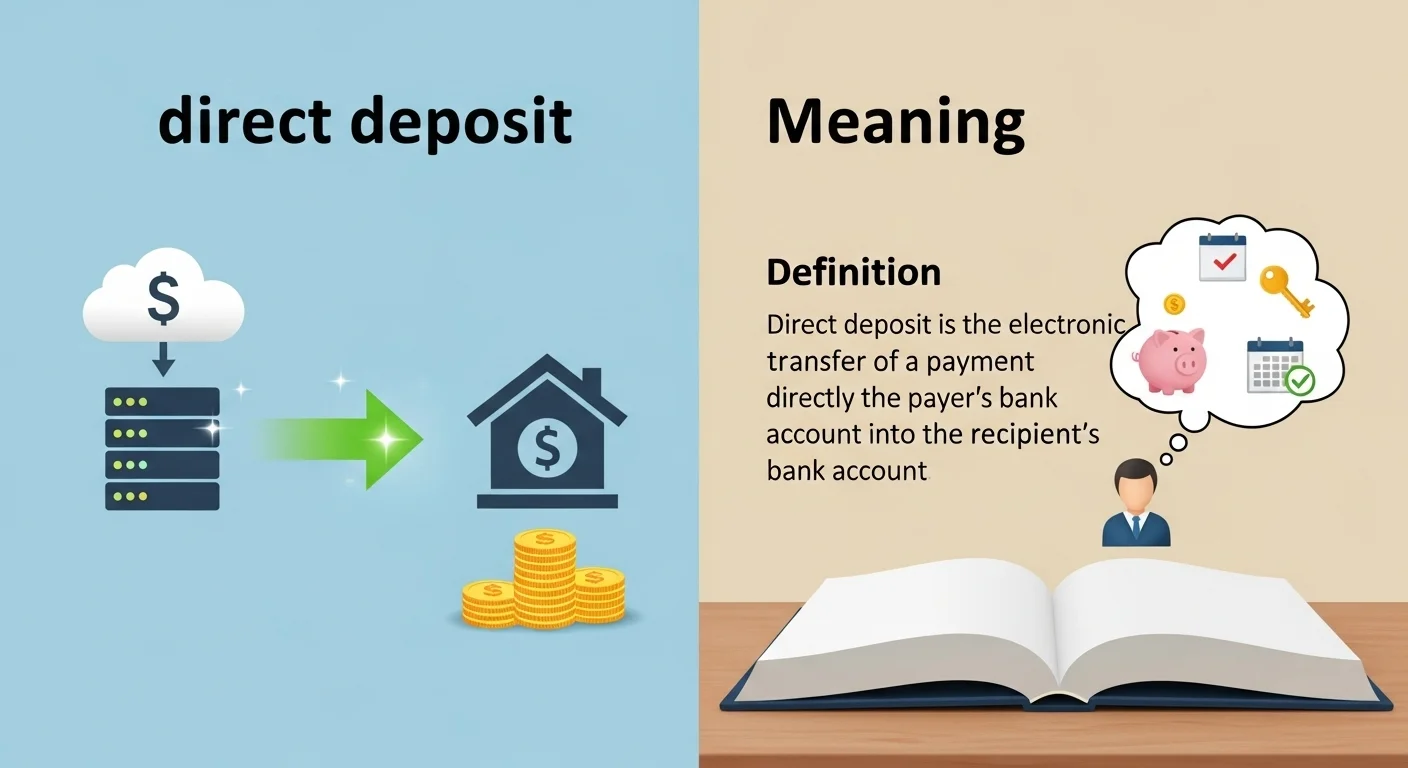
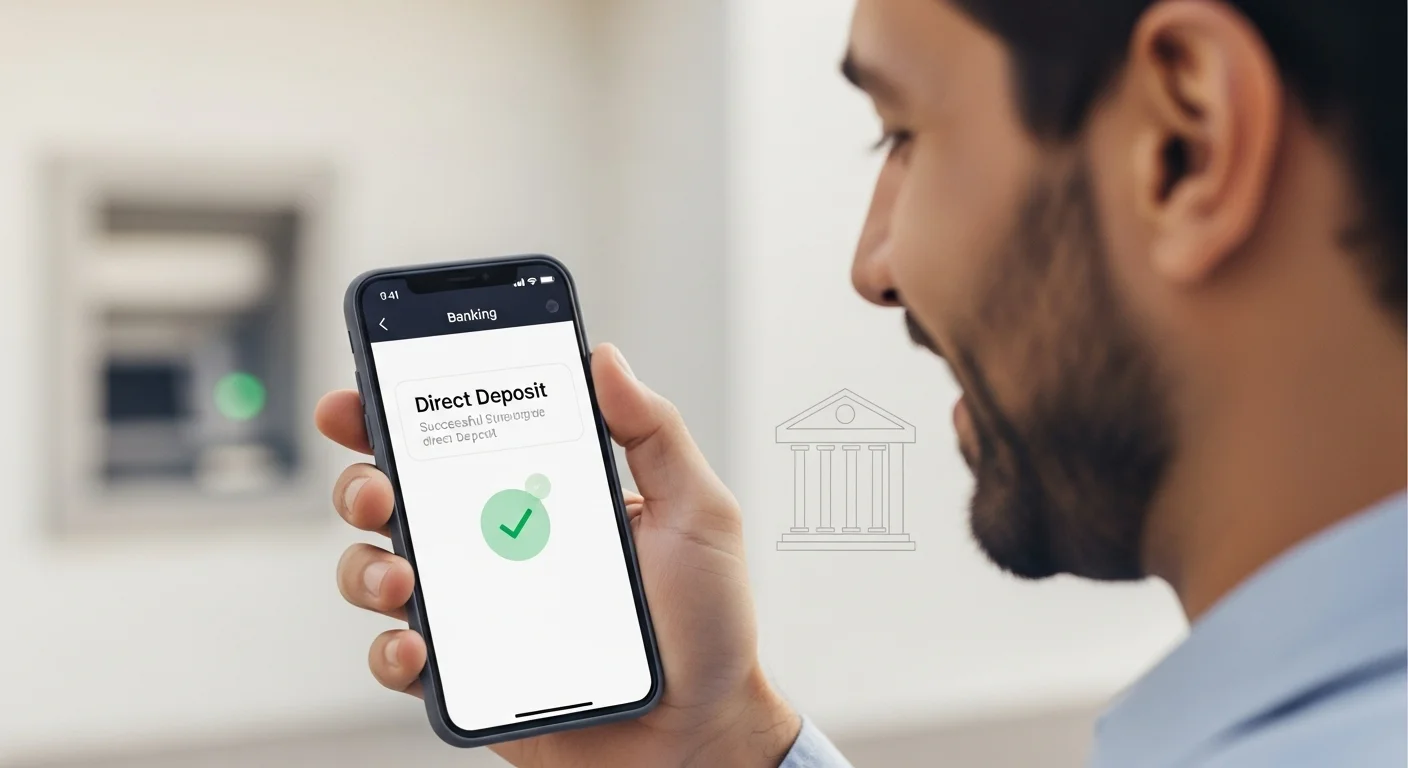
Direct deposit means that money is transferred electronically straight into your bank account instead of being given to you as cash or a paper check.
The payment goes directly from the payer (like an employer or government agency) to your bank using a secure electronic system.
In short:
No check. No cash. No waiting. Just money in your account.
Simple Definition of Direct Deposit
Direct deposit is an electronic payment method where funds are automatically sent to a person’s bank account.
It is commonly used for:
-
Salary payments
-
Government benefits
-
Tax refunds
-
Pensions
-
Freelance or contract payments
How Direct Deposit Works
Direct deposit works through a secure banking network. Here’s how the process usually goes:
-
You provide your bank account number and routing number
-
The payer enters this information into their payment system
-
On payment day, money is sent electronically
-
Funds appear in your account automatically
Most deposits happen within 1 business day or even instantly.
Where Is Direct Deposit Commonly Used?
Direct deposit is used almost everywhere today, including:
-
Jobs and salaries
-
Government payments (social security, unemployment benefits)
-
Tax refunds
-
Scholarships and student aid
-
Freelance platforms
-
Pension and retirement payments
Many employers now require direct deposit as the main payment option.
Direct Deposit Meaning in a Job or Salary Context
When a job says “payment via direct deposit”, it means:
-
Your salary will go straight into your bank account
-
You won’t receive a physical paycheck
-
Payment is automatic every pay period
This helps avoid delays, lost checks, or long bank lines.
Direct Deposit Meaning in Banking
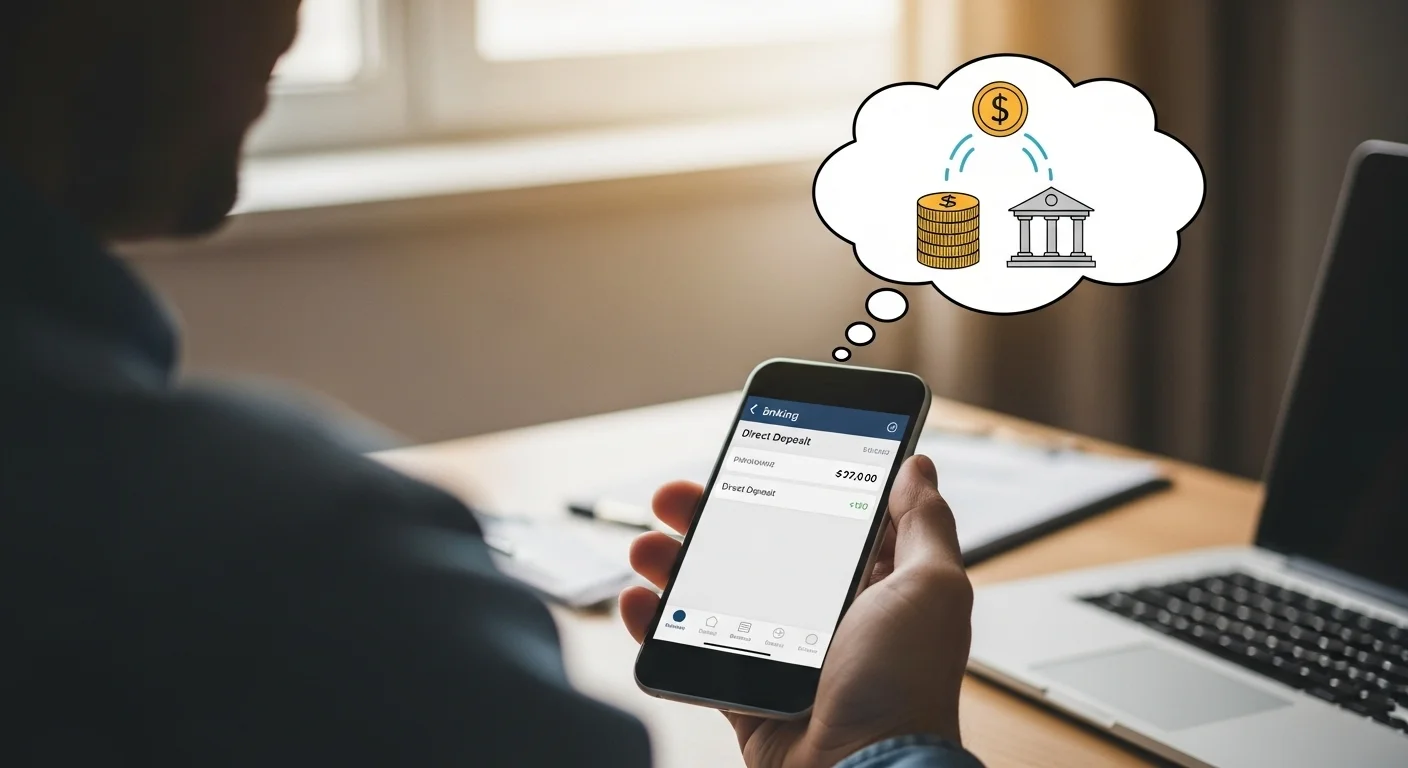
In banking, direct deposit refers to incoming electronic funds credited to your account.
Banks often encourage direct deposit because it’s:
-
Secure
-
Traceable
-
Faster than manual deposits
Some banks even offer bonuses or benefits if you use direct deposit regularly.
Advantages of Direct Deposit
Direct deposit has many benefits, which is why it’s so popular:
-
Faster access to money
-
No risk of lost or stolen checks
-
No need to visit the bank
-
Automatic and reliable
-
Environment-friendly (no paper)
Many people receive their money earlier with direct deposit than with checks.
Disadvantages of Direct Deposit
While direct deposit is convenient, there are a few downsides:
-
Requires a bank account
-
Errors can take time to fix
-
Not ideal if you prefer cash payments
However, these issues are rare and usually easy to resolve.

Real-Life Examples of Direct Deposit
Example 1:
“I got paid today through direct deposit, and the money was already in my account when I woke up.”
Example 2:
“The company requires direct deposit for monthly salaries.”
Example 3:
“My tax refund came by direct deposit instead of a check.”
Each example shows how direct deposit saves time and effort.
Common Mistakes & Misunderstandings
Many people misunderstand direct deposit. Common mistakes include:
-
Thinking it’s the same as a bank transfer you make yourself
-
Believing it’s unsafe (it’s actually very secure)
-
Confusing it with mobile payments or cash apps
Direct deposit is handled by official banking systems, not casual transfers.
Related Financial Terms
Here are some related terms you might see with direct deposit:
-
ACH transfer – The system used for direct deposits
-
Payroll – Employee payment system
-
Routing number – Identifies the bank
-
Net pay – Amount deposited after deductions
-
Electronic funds transfer (EFT) – Another term for digital payments
These terms often appear in banking and job documents.