What Does Alright Mean?
Alright is an informal word that generally means okay, satisfactory, or acceptable.
In simple terms:
Alright = fine, good, or acceptable
It’s often used in casual conversation, texting, and modern writing.
Alright as an Agreement
People use alright to show agreement.
Examples:
- “Alright, I’ll do it.”
- “Alright, see you later.”
Here, it acts like saying okay or fine.
Alright as a Description
Alright can describe something as being satisfactory or decent.
Examples:
- “The movie was alright.” (It was okay, not amazing)
- “His performance was alright.”
It is often used when something is acceptable but not outstanding.
Alright as a Conversation Starter
People sometimes use alright at the beginning of a sentence to start a conversation or signal attention.
Example:
- “Alright, let’s get started.”
- “Alright, everyone, listen up.”
It’s similar to saying okay, now….
Alright vs All Right
This is a common question.
- All right: Always correct in formal writing; literally means “everything is correct or satisfactory.”
- Example: “Everything is all right.”
- Alright: Informal, widely accepted in modern English, especially in texts and casual writing.
- Example: “Alright, I’ll meet you there.”
Many style guides still prefer all right in formal contexts.
Alright in Texting and Chat
In texting, alright is often used to:
- Acknowledge messages
- Agree to plans
- Start conversations casually
Examples:
- “Alright, see you at 5.”
- “Alright, I get it.”
It is a staple in modern texting culture.

Alright in Music and Pop Culture
The word alright appears frequently in song lyrics, movies, and social media.
Example: Kendrick Lamar’s song “Alright” uses the word as a message of reassurance and positivity.
Alright in Everyday Conversation
People also use alright when expressing mild emotions, like relief or acceptance.
Examples:
- “It’s alright, don’t worry.”
- “I’m feeling alright today.”
It can express both agreement and comfort.
Common Mistakes with Alright
- Using alright in very formal writing (use all right instead)
- Misinterpreting it as “excellent” (it usually just means okay)
- Overusing it in writing where more precise words would fit
Synonyms of Alright
Some common synonyms include:
- Okay
- Fine
- Acceptable
- Good
- Satisfactory
These words can replace alright in most casual contexts.
Antonyms of Alright
Opposite words include:
- Bad
- Poor
- Unsatisfactory
- Wrong
These indicate the opposite meaning.
Why Alright Matters
Understanding alright is important because:
- It appears frequently in spoken and written English
- It conveys agreement, reassurance, or casual approval
- It helps you understand texts, messages, and conversation naturally
Examples of Alright in Sentences
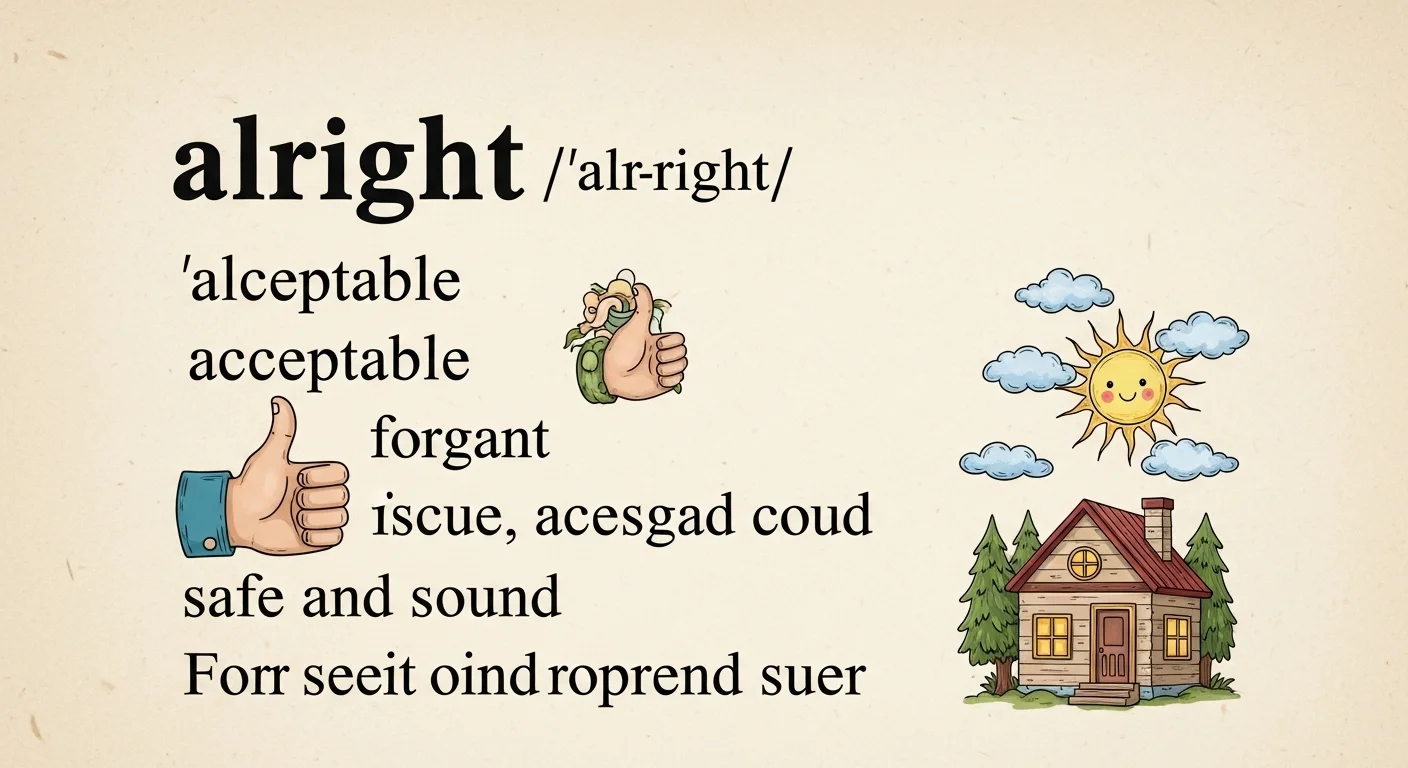
- “Are you feeling alright?” (Checking well-being)
- “Alright, let’s go to the park.” (Agreement and starting action)
- “The food was alright, nothing special.” (Describing quality)
- “Alright, I understand now.” (Acknowledging information)