
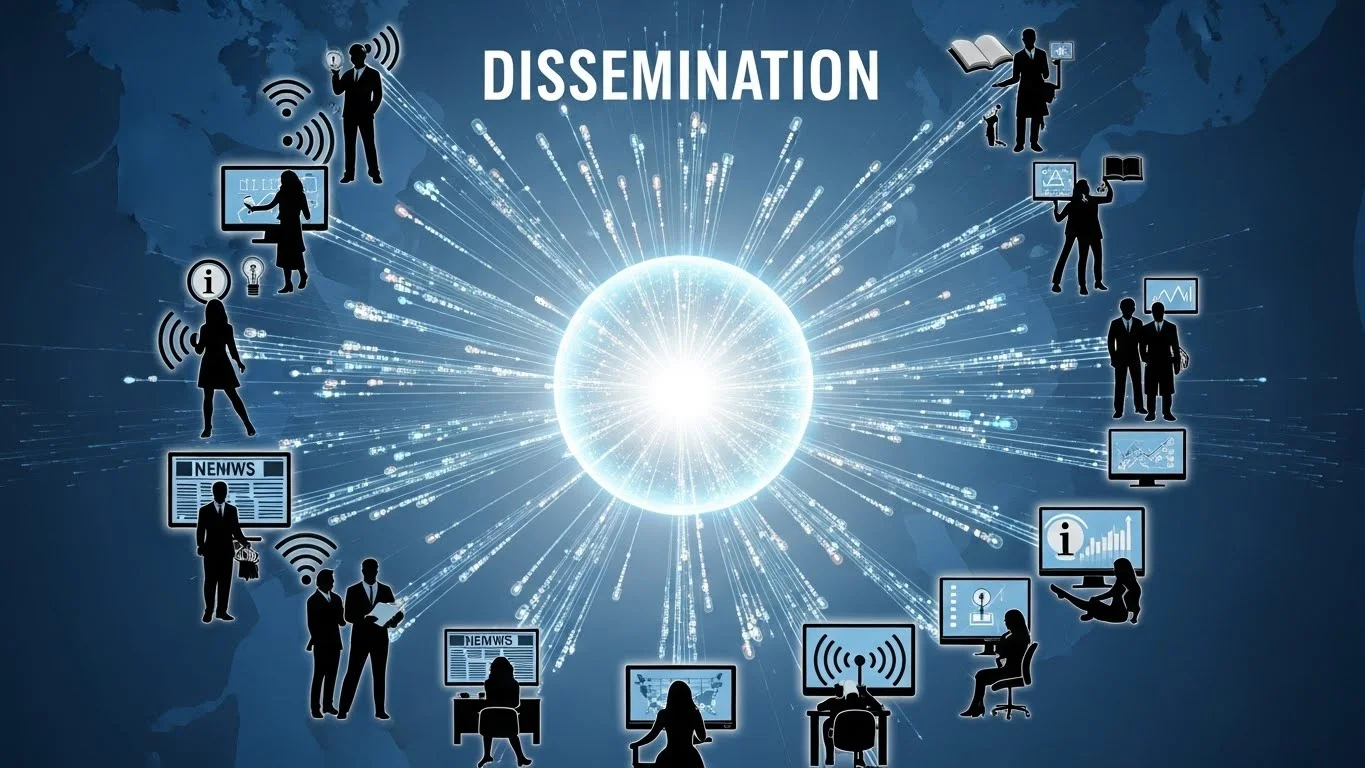
What Does Dissemination Mean?
Dissemination refers to the act of spreading information, ideas, or knowledge widely so that many people can access and understand it.
In simple words:
Dissemination = sharing knowledge or information broadly
Examples:
A school disseminates study materials to students
A government disseminates public health guidelines
Scientists disseminate research findings in journals
The key idea is distribution and awareness.
Dissemination Meaning in Communication
In communication, dissemination focuses on making information reach the target audience effectively.
It involves:
Choosing the right channels (social media, newsletters, meetings)
Ensuring clarity of message
Reaching a wide or specific audience
For example:
A company disseminates updates to employees via email.
A social media campaign disseminates information about climate change.
Dissemination in Education and Research
In education and research, dissemination is critical for sharing knowledge, findings, or innovations.
Researchers disseminate their results through journals, conferences, and seminars
Teachers disseminate learning materials and resources to students
Universities disseminate information about programs and policies
Without dissemination, knowledge would remain limited and unused.
Dissemination in Public Health and Government
Government and health organizations frequently use dissemination to:
Share safety guidelines
Inform citizens about policies
Spread awareness during emergencies (like pandemics)
Example:
Health agencies disseminate vaccine information to communities.
This ensures people stay informed and can take action.
Dissemination vs Distribution
Dissemination is often confused with distribution, but they’re slightly different:
Distribution: simply giving something out
Dissemination: actively spreading knowledge or information with intent to educate or inform
Example:
Mailing a brochure = distribution
Publishing an article online for public education = dissemination
Real-Life Examples of Dissemination
Example 1: A university disseminates research papers to other institutions.
Example 2: NGOs disseminate information about hygiene practices in rural areas.
Example 3: A government disseminates traffic rules to citizens through awareness campaigns.
Example 4: Scientists disseminate COVID-19 research findings to help policymakers.
These examples show how dissemination ensures knowledge reaches its intended audience.
Why Dissemination Is Important
Dissemination is crucial because:
It spreads knowledge widely
Helps people make informed decisions
Supports education and research growth
Ensures transparency in governance and organizations
Encourages collaboration and innovation
Without dissemination, information remains limited and ineffective.
Common Misunderstandings About Dissemination
Dissemination is not just sending information: It must reach and be understood by the audience.
It’s not always digital: Dissemination can be oral, written, or visual.
It’s not random sharing: Effective dissemination targets the right people.
Dissemination in Digital Media
In 2025, digital media has made dissemination faster and broader:
Social media campaigns
Blogs and online articles
News websites
Webinars and online workshops
Digital platforms allow information to be disseminated globally in minutes.
Dissemination in Science and Technology
Researchers rely on dissemination to:
Share breakthroughs
Validate studies
Encourage adoption of new technology
Without dissemination, innovation cannot impact society effectively.

Dissemination in Everyday Life
Even outside formal settings, we disseminate information daily:
Sharing news or updates with friends
Posting helpful tips on social media
Teaching someone a new skill
It’s essentially knowledge sharing at any scale.