
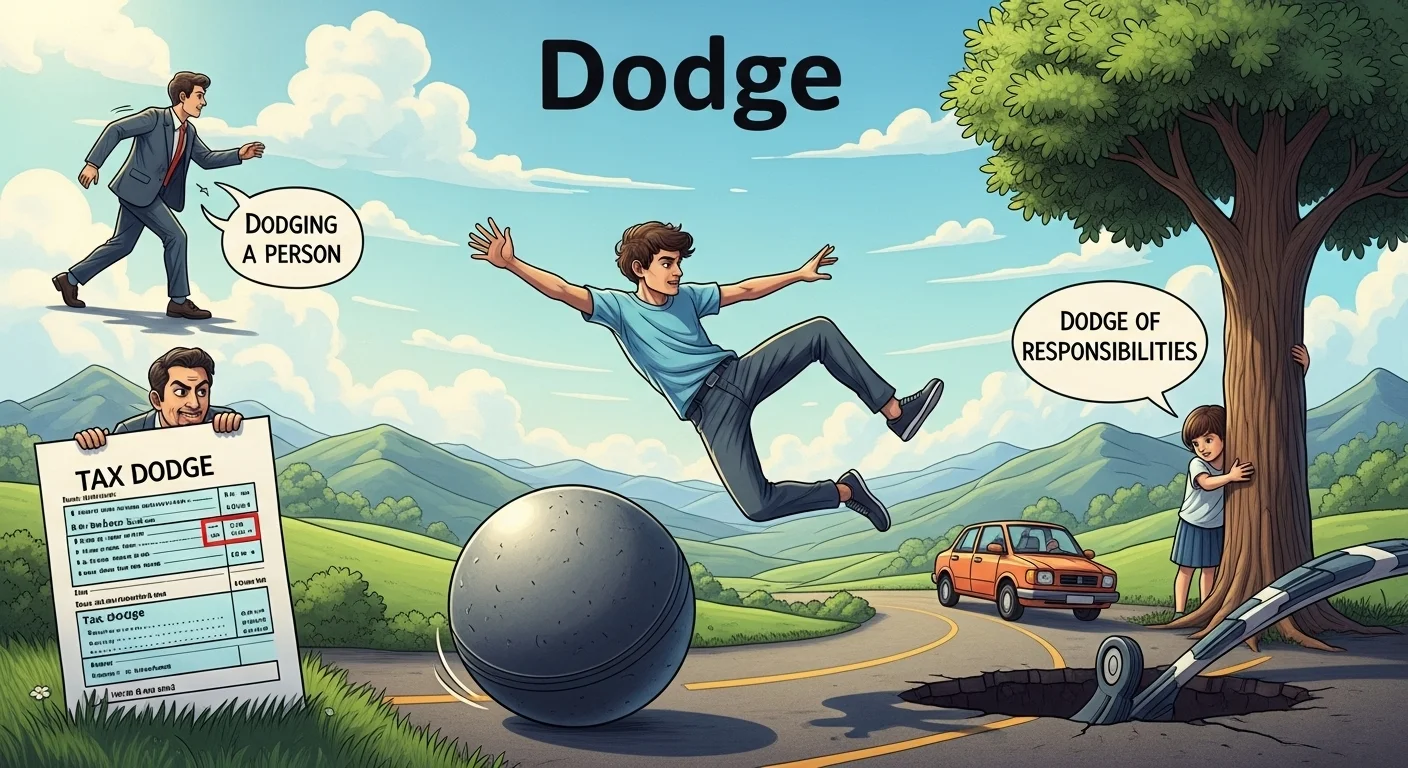

What Does “Dodge” Mean?
Basic Meaning:
Dodge means to avoid something quickly or cleverly, especially to escape danger, responsibility, or impact.
In simple terms:
To move away fast
To avoid getting hit, blamed, or caught
Example:
He dodged the ball.
She dodged the question.
Dodge Meaning as a Verb
As a verb, dodge describes an action.
Common meanings:
To avoid physically
To avoid answering
To escape responsibility
Examples:
He dodged the punch.
The politician dodged the question.
She dodged her homework all week.
Dodge Meaning as a Noun
As a noun, dodge refers to a trick or clever move used to avoid something.
Examples:
“That excuse is just a dodge.”
“He used a legal dodge to avoid taxes.”
Here, dodge means a sneaky method or excuse.
Dodge Meaning in Daily Life
In everyday English, dodge is used for:
Avoiding trouble
Escaping awkward situations
Getting out of duties
Examples:
“I dodged traffic by taking a side road.”
“He dodged his boss all day.”
Dodge Meaning in Sports
In sports, dodge means:
To quickly move aside to avoid contact
Examples:
The boxer dodged the punch.
The football player dodged the defender.
It emphasizes speed, awareness, and skill.
Dodge Meaning in Slang and Informal Speech
In casual or slang use, dodge often means:
Avoiding responsibility
Ignoring something on purpose
Examples:
“He’s dodging my texts.”
“Stop dodging the topic.”
Tone matters—this usage can sound accusatory or playful.

Dodge vs Avoid: What’s the Difference?
Though similar, they’re not the same.
Dodge:
Quick, active movement
Often physical or intentional
Avoid:
General or planned staying away
Example:
He avoided the meeting.
He dodged the question.
Common Phrases Using “Dodge”
Here are popular expressions:
Dodge a bullet – avoid serious trouble
Dodge the issue – avoid discussing something
Dodge responsibility – escape duties
Dodge danger – avoid harm
These phrases are very common in spoken English.
Real-Life Examples of “Dodge”
Example 1:
“She dodged the falling object just in time.”
Meaning: She moved quickly to avoid it.
Example 2:
“He keeps dodging my calls.”
Meaning: He is intentionally avoiding communication.
Example 3:
“That’s just a clever dodge.”
Meaning: That’s a trick to avoid something.
Common Mistakes When Using “Dodge”
Using dodge in formal writing where “avoid” fits better
Confusing dodge with delay
Forgetting that dodge often implies intentional action
Incorrect:
He dodged homework accidentally.
Correct:He dodged homework on purpose.
Related Words and Synonyms
Words similar to dodge include:
Avoid
Evade
Escape
Bypass
Sidestep
Each has a slightly different tone and usage.

Is “Dodge” a Negative Word?
Not always.
Neutral: dodging a ball
Positive: dodging danger
Negative: dodging responsibility
Context decides the tone.