What Is the Flower Moon?
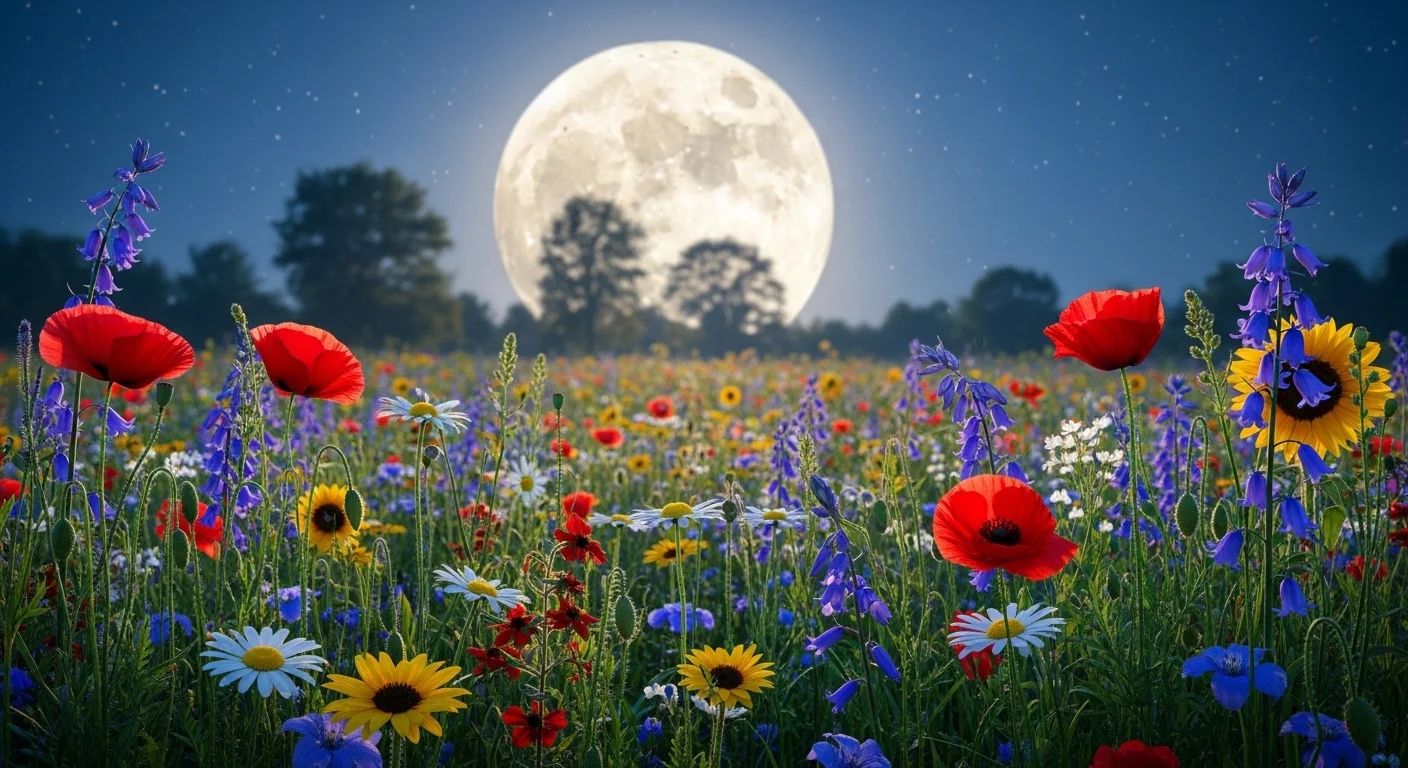
The Flower Moon is the traditional name for the full moon that occurs in May.
It is not a different type of moon — it’s simply May’s full moon.
Like many full moons throughout the year, it carries a seasonal name connected to nature.
Why Is It Called the Flower Moon?
The name comes from the abundance of blooming flowers during May in North America.
By this time of year:
-
Spring is fully underway
-
Wildflowers are blooming
-
Trees are flowering
-
Fields are vibrant and colorful
Because of this seasonal explosion of plant life, May’s full moon was called the Flower Moon.
Origin of the Flower Moon Name
The Flower Moon name is commonly attributed to Native American seasonal naming traditions.
Many Native American tribes named full moons to reflect natural events happening at that time of year.
The names helped mark:
-
Seasonal changes
-
Planting cycles
-
Harvest preparation
-
Wildlife behavior
The Flower Moon reflects one of the most visible signs of late spring: blooming flowers.
Is the Flower Moon an Official Astronomical Term?
No.
Astronomically, it is simply the full moon in May.
Names like Flower Moon are traditional and cultural, not scientific classifications.
However, they are widely recognized in almanacs and lunar calendars.
Other Names for the Flower Moon
Different cultures have given May’s full moon other names, including:
-
Milk Moon
-
Corn Planting Moon
-
Hare Moon
Each name reflects regional traditions and agricultural cycles.
Spiritual Meaning of the Flower Moon
Many people associate the Flower Moon with:
-
Growth
-
Renewal
-
Fertility
-
New beginnings
-
Abundance
-
Personal transformation
Because it occurs during peak spring, it symbolizes expansion and life energy.
Spiritually, it represents a time to bloom — just like nature.
Flower Moon and Personal Growth
Symbolically, the Flower Moon encourages:
-
Letting go of past limitations
-
Embracing new opportunities
-
Focusing on self-development
-
Starting new projects
Just as flowers reach full bloom, this moon is often seen as a reminder to step into your full potential.
Flower Moon in Astrology
In astrology, the Flower Moon takes on the zodiac sign it occurs in.
Its meaning can shift depending on:
-
The zodiac season
-
Planetary alignments
-
Lunar aspects
Astrologers often interpret it as a powerful time for emotional clarity and intention-setting.
Is the Flower Moon Rare?
No.
The Flower Moon happens every year in May.
However, it may feel special because of its seasonal beauty and cultural symbolism.
When Does the Flower Moon Occur?
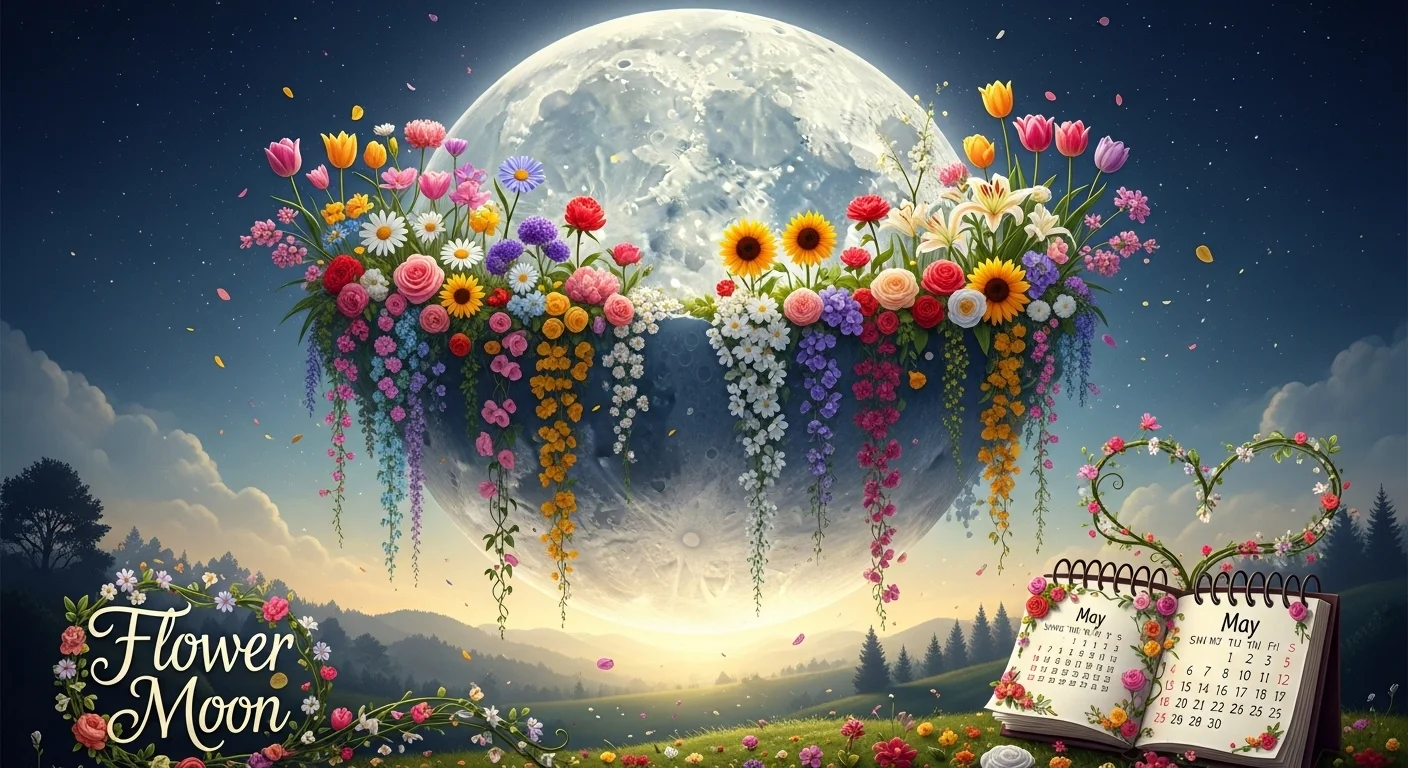
The Flower Moon occurs when the moon reaches full illumination during the month of May.
The exact date changes each year based on the lunar cycle.
Flower Moon and Nature
The Flower Moon aligns with:
-
Pollination season
-
Increased daylight hours
-
Warmer temperatures
-
Heightened plant growth
This strong connection to nature reinforces its meaning of vitality and abundance.
Flower Moon in Modern Culture
Interest in the Flower Moon has grown due to:
-
Social media
-
Spiritual communities
-
Astrology trends
-
Nature awareness movements
Many people now use it as a time for reflection and goal-setting.
Flower Moon Rituals and Practices
Some people celebrate the Flower Moon by:
-
Spending time outdoors
-
Setting personal intentions
-
Journaling
-
Practicing gratitude
-
Connecting with nature
These practices are symbolic rather than required.
Is the Flower Moon Connected to Love?
Because of its association with blooming and fertility, some traditions link it to:
-
Romance
-
Creativity
-
Emotional expression
Spring energy naturally supports themes of connection and renewal.
Flower Moon vs Other Named Full Moons
Throughout the year, other full moons include:
-
Wolf Moon (January)
-
Snow Moon (February)
-
Harvest Moon (autumn)
Each one reflects seasonal patterns.
The Flower Moon is specifically tied to late spring abundance.
Does the Flower Moon Look Different?
No.
It does not appear pink or floral.
It looks like any other full moon.
The name refers to the season, not the moon’s color or shape.
Why Do Seasonal Moon Names Matter?
Seasonal moon names were important historically because they:
-
Helped track time
-
Marked planting and harvesting
-
Guided survival planning
Before modern calendars, lunar cycles were essential time markers.
The Emotional Energy of the Flower Moon
Emotionally, many associate the Flower Moon with:
-
Optimism
-
Joy
-
Expansion
-
Openness
It often arrives during a time of year when people feel more energized and hopeful.
Flower Moon and Renewal Themes
Spring is about:
-
Growth after winter
-
Rebirth
-
Reawakening
The Flower Moon represents the peak of that renewal process.
Why the Flower Moon Feels Inspiring
The combination of:
-
Longer days
-
Warmer weather
-
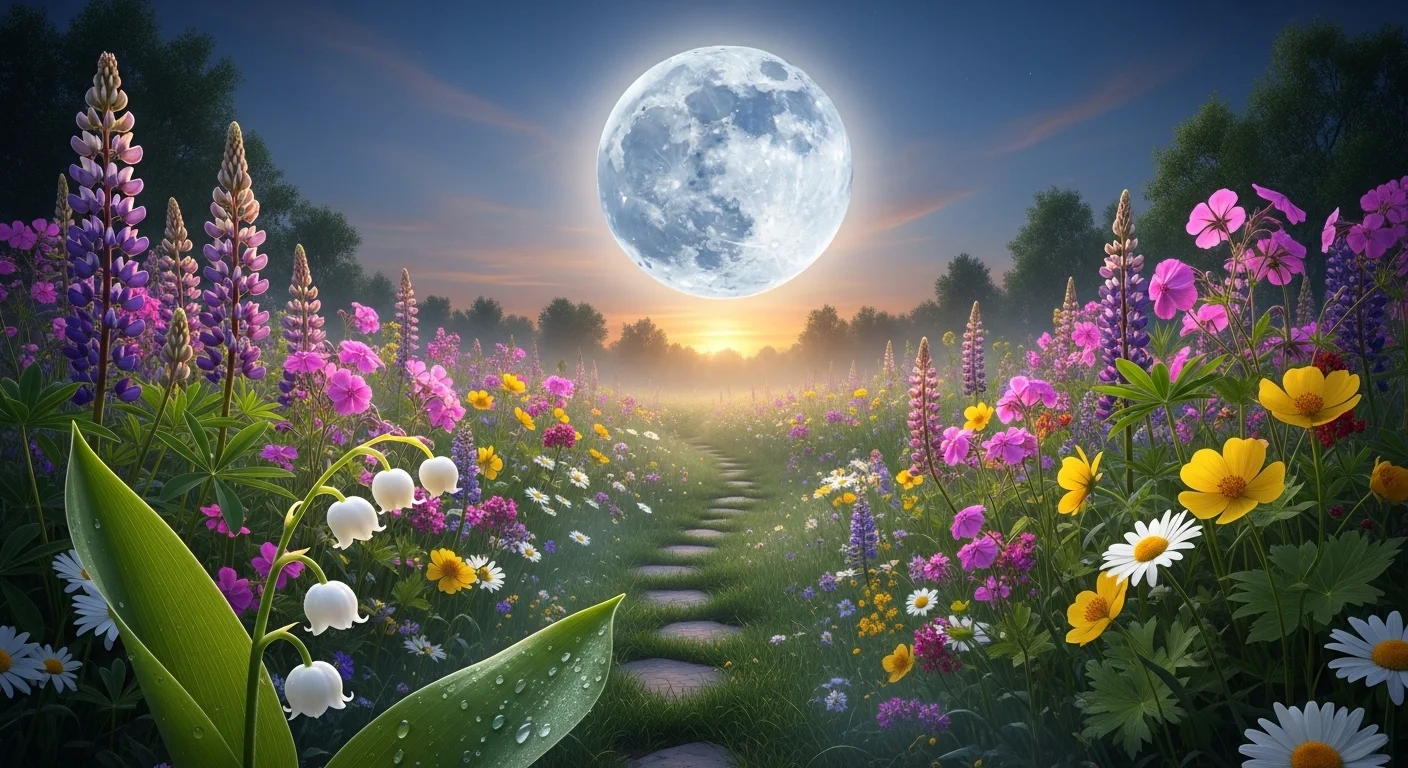
Blooming landscapes
Creates a naturally uplifting atmosphere.
The Flower Moon symbolizes stepping into full expression.