Temperament meaning in English
In English, temperament means:
A person’s natural way of thinking, feeling, and reacting.
It is the inborn emotional style that makes someone:
-
calm or aggressive
-
shy or social
-
slow or quick to react
Temperament is something we are usually born with.
Temperament in psychology
In psychology, temperament is the basic emotional and behavioral style that appears from early childhood and often continues through life.
It influences:
-
how fast someone gets angry
-
how easily they get excited
-
how sensitive they are
-
how comfortable they feel with people or change
Psychologists study temperament to understand behavior and personality development.
Temperament versus mood
Temperament and mood are different.
Mood:
-
changes quickly
-
depends on situation
-
can be happy in the morning and sad at night
Temperament:
-
is long-term
-
is part of your natural character
-
does not change easily
So mood is temporary, temperament is stable.
Temperament versus personality
Temperament is part of personality but not the same.
Personality includes:
-
habits
-
beliefs
-
values
-
experiences
Temperament is the natural base underneath personality.
Personality is built over it through life experiences.
Types of temperament in general use
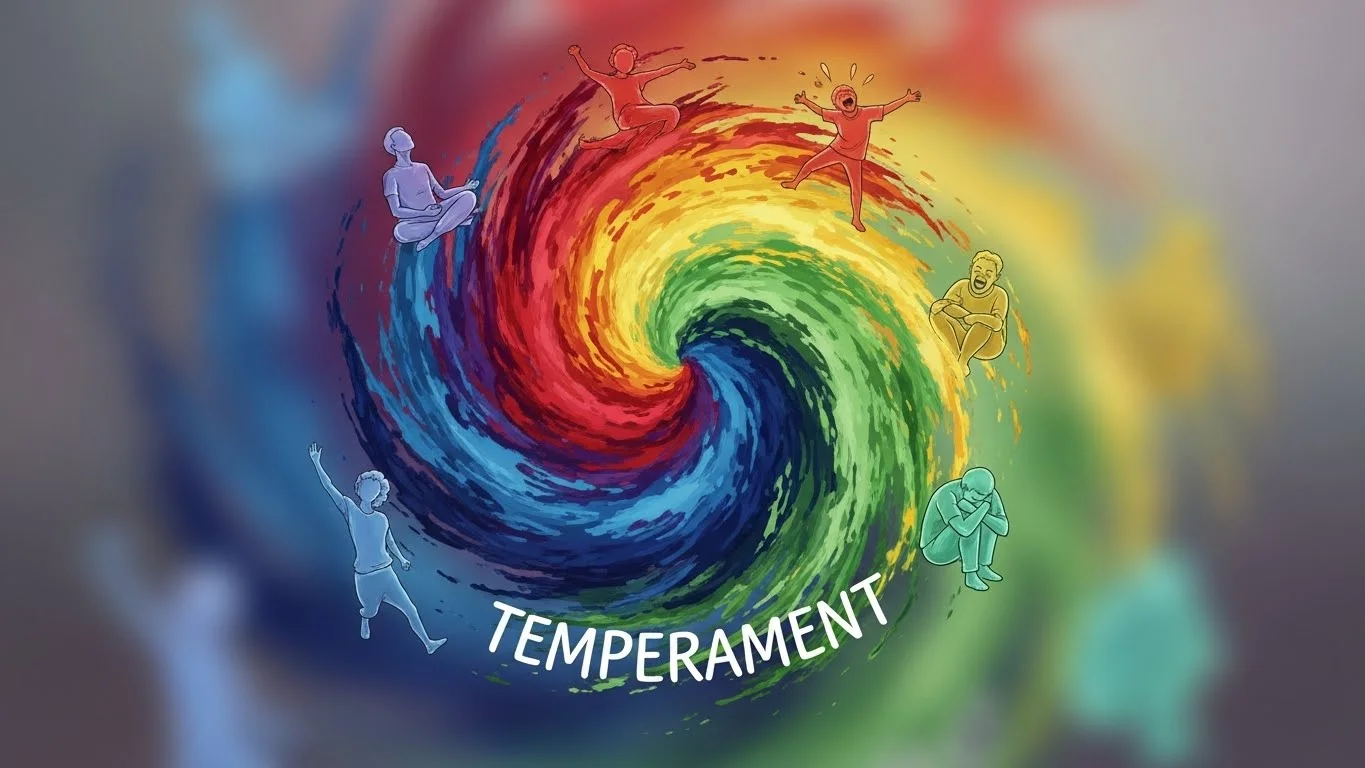
Traditionally, four classic temperament styles are often mentioned:
-
choleric: energetic and strong-willed
-
sanguine: cheerful and social
-
melancholic: thoughtful and sensitive
-
phlegmatic: calm and peaceful
These words are old but still used to describe basic emotional styles.
Temperament in children
Temperament is clearly seen in children.
Some children are:
-
calm and quiet
-
active and restless
-
shy around strangers
-
quick to cry or quick to laugh
Parents understand their child better by knowing their temperament.
Temperament in adults
In adults, temperament shows in how they:
-
handle stress
-
react to conflict
-
communicate with others
-
adapt to change
For example, someone with a calm temperament stays composed, while a fiery temperament reacts quickly.
Emotional temperament
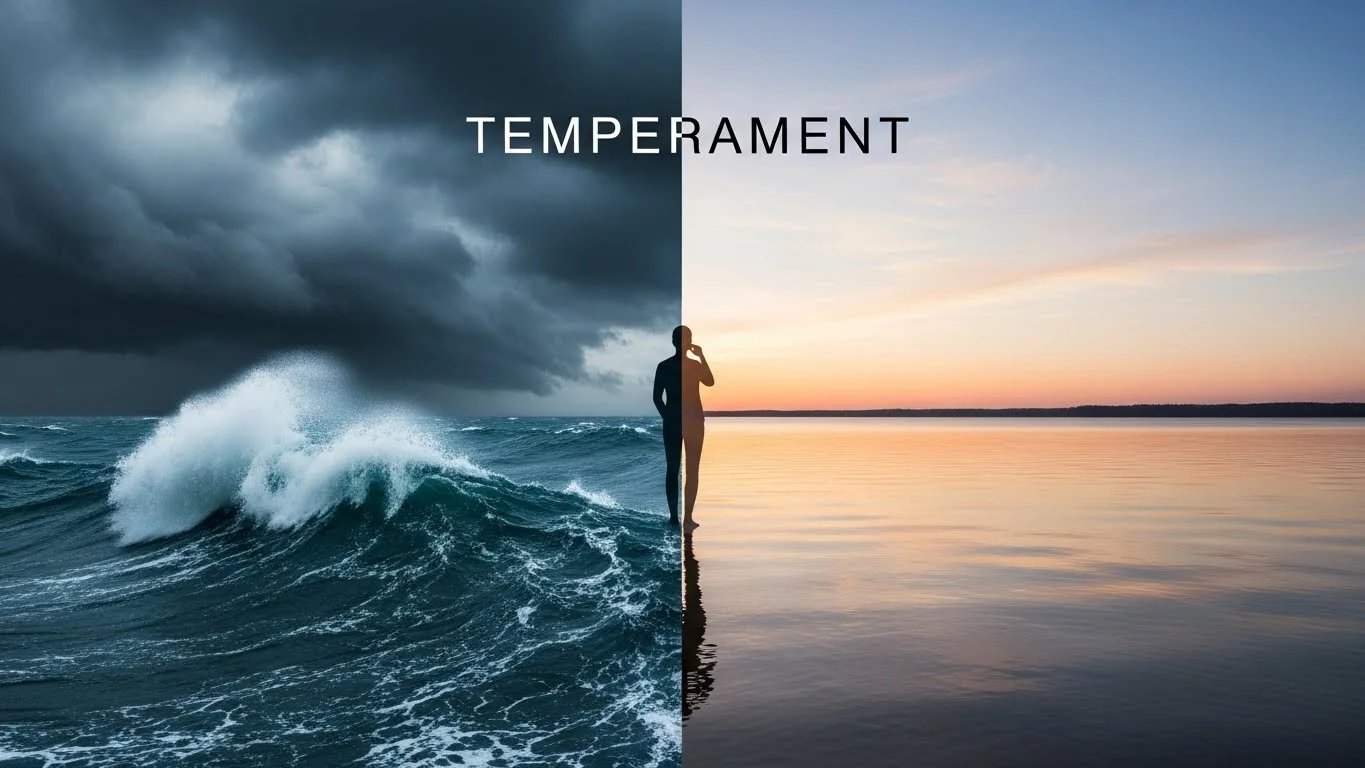
Emotional temperament refers to how strongly a person feels emotions.
Some people:
-
feel emotions deeply
-
get hurt easily
-
become excited fast
Others:
-
stay controlled
-
feel things more lightly
-
react less intensely
Both are normal — just different temperaments.
Biological and genetic influence on temperament
Research shows temperament is partly:
-
inborn
-
genetic
-
influenced by brain and nervous system
Environment and upbringing can shape it, but basic temperament usually remains.
Temperament in relationships
Temperament plays a big role in relationships.
It affects:
-
communication style
-
patience level
-
handling disagreements
-
emotional expression
Opposite temperaments may balance each other, or sometimes clash.
Temperament in workplace and career
At work, temperament influences:
-
leadership style
-
teamwork behavior
-
stress handling
-
decision-making speed
For example, calm temperaments suit mediation roles; energetic temperaments suit sales or creative fields.

Examples of temperament in daily life
Examples include:
“She has a gentle temperament and never shouts.”
“His temperament is aggressive; he reacts very fast.”
“The baby has a difficult temperament and cries often.”
“My friend’s temperament is cheerful and positive.”
These show how the word is used in real conversation.