What Does “Vignette” Mean?
Vignette has a few closely related meanings depending on context:
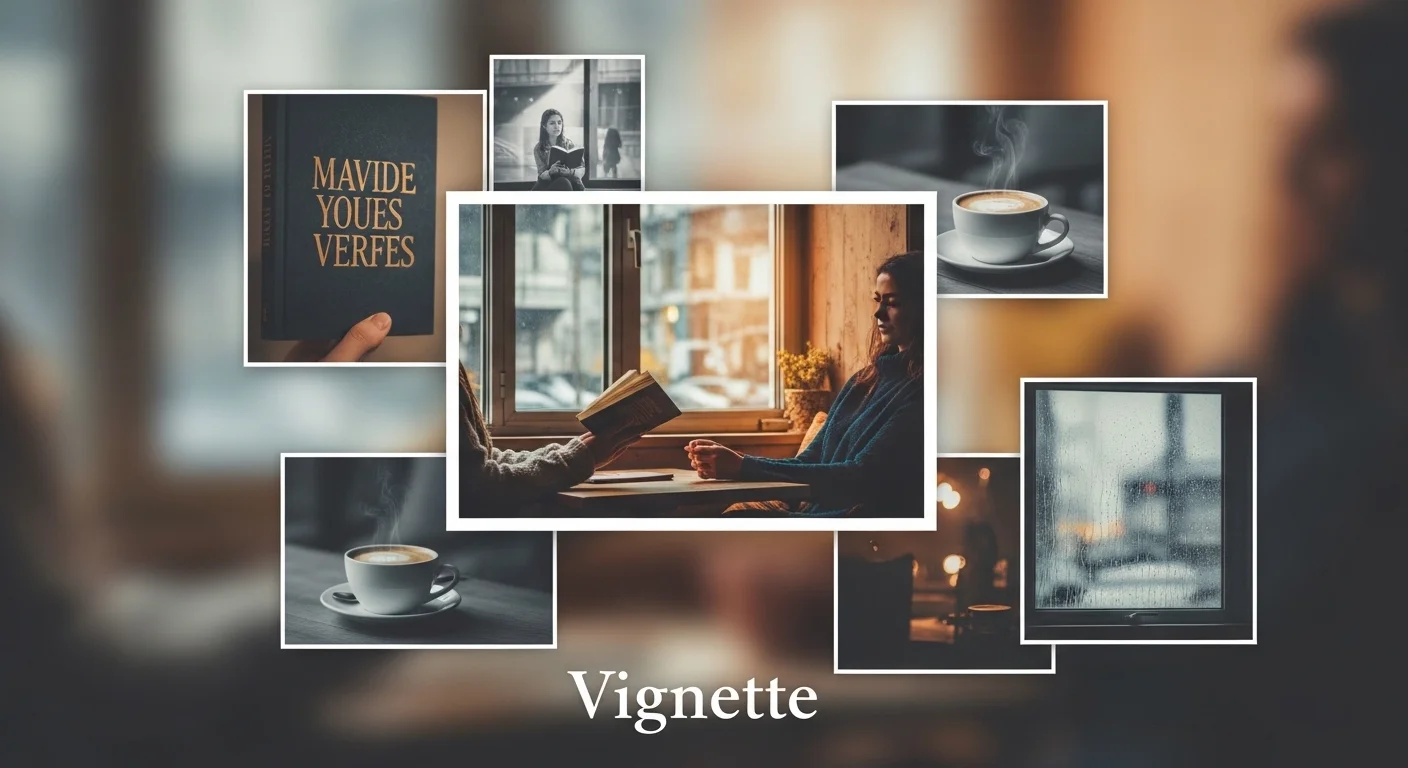
In literature: A short, descriptive scene or passage that focuses on a moment, character, or mood rather than a full plot.
In film or TV: A brief scene or segment that stands on its own or adds atmosphere to the larger story.
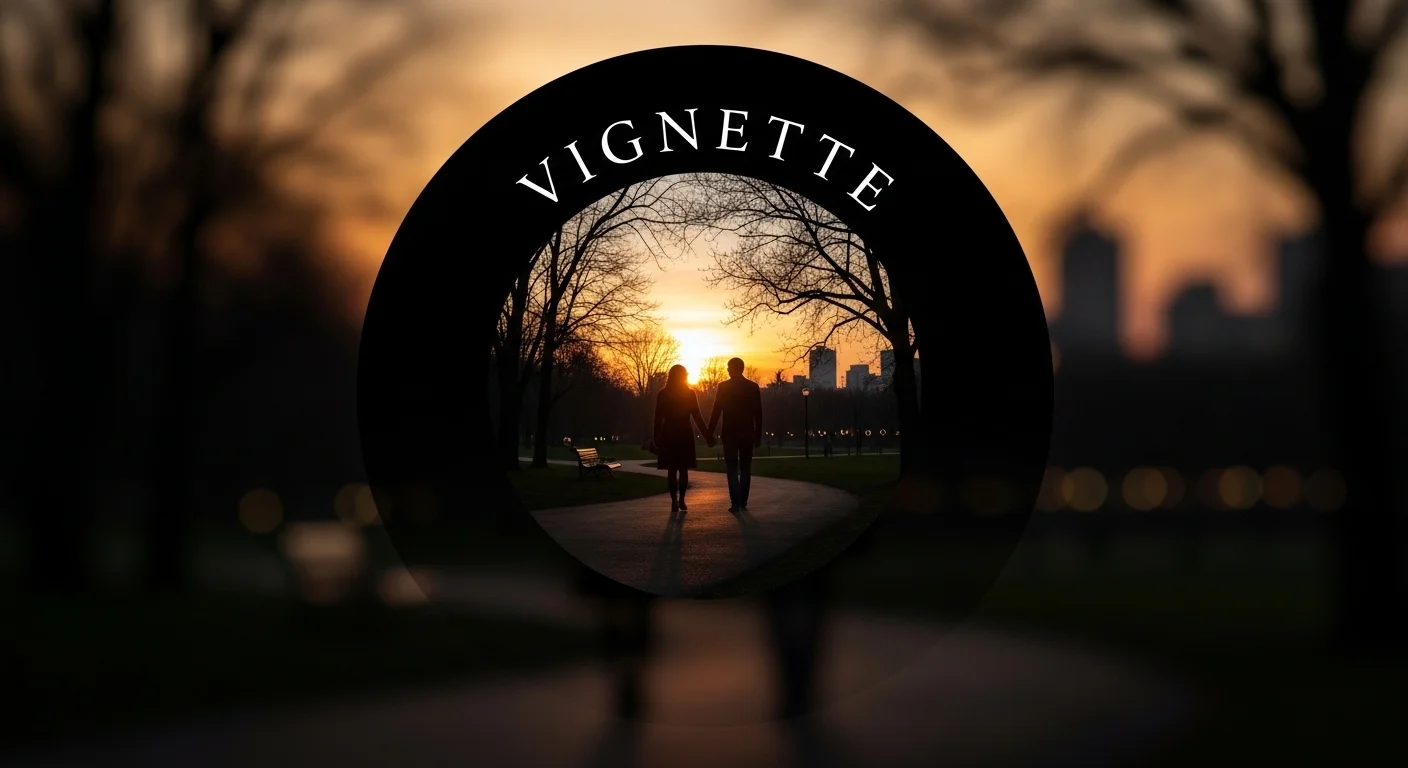
In photography: A darkened or softened edge around an image that draws attention to the center.
In everyday language: A small but vivid snapshot of life—a quick, memorable moment or description.
Key idea: A vignette is about focus and mood, not long storytelling.
The Origin of the Word “Vignette”
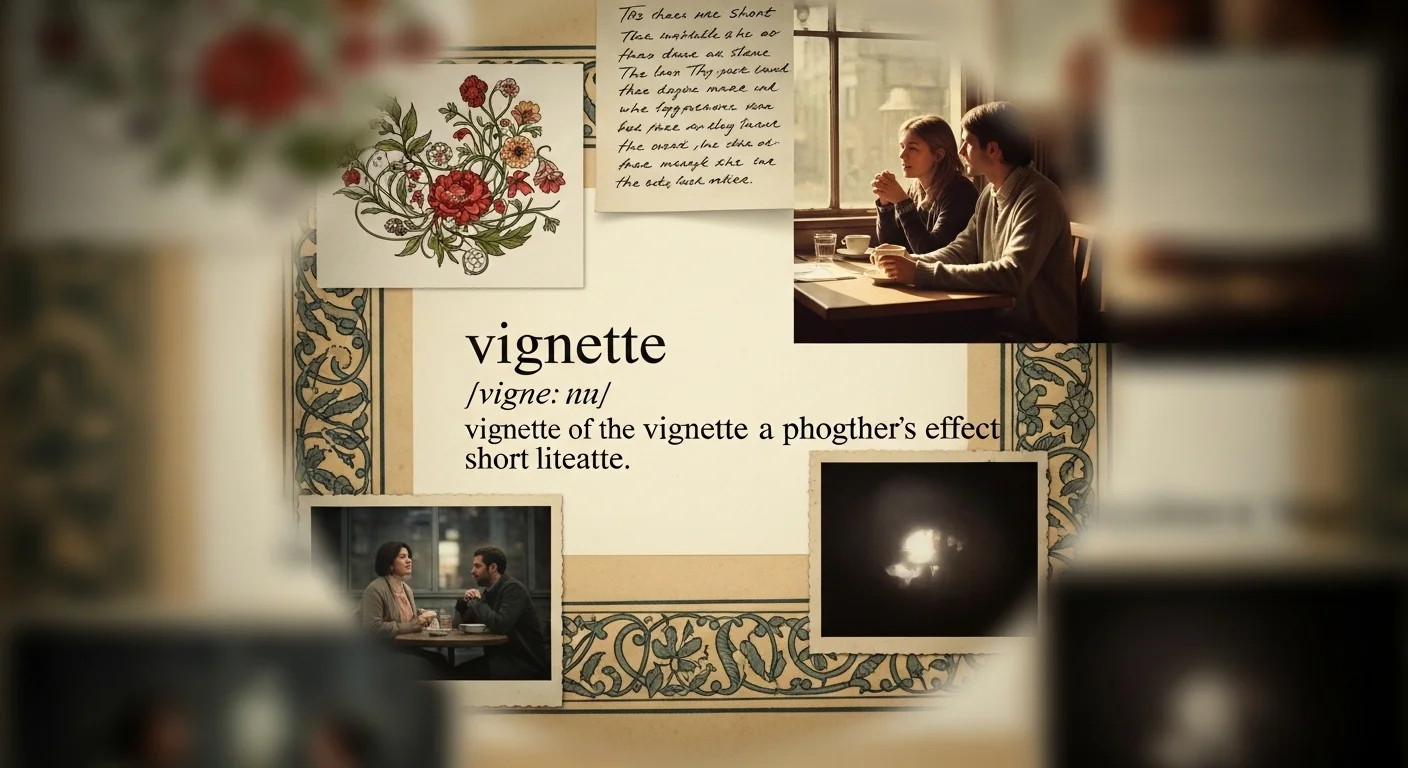
The word vignette comes from French, where it originally meant a small decorative design in books, often shaped like a vine (“vigne”). Over time, the meaning shifted to describe small, decorative or focused scenes in writing and art. Today, the word keeps that same feeling: something short, concentrated, and expressive.
How “Vignette” Is Used in Literature
In books and essays, a vignette is usually:
Short
Descriptive
Focused on one moment, place, or feeling
Not dependent on a full beginning-middle-end plot
Writers use vignettes to:
Show a character’s personality
Create a strong mood or atmosphere
Highlight a meaningful memory
Add emotional depth without long explanations
For example, a novelist might include a vignette about a child waiting for a bus in the rain—not to move the plot forward, but to show loneliness or hope.
How “Vignette” Is Used in Film and TV
In movies and TV shows, a vignette can be:
A short, self-contained scene
A moment that adds emotion, humor, or background
A small story inside a bigger story
Some shows and films are even built from a series of vignettes, each showing a different character or moment, all connected by theme rather than by one single plot.
What “Vignette” Means in Photography
In photography, a vignette is a visual effect where:
The edges of the photo are darker or softer
The center of the image is brighter and more focused
The viewer’s eye is naturally drawn to the main subject
Photographers use vignetting to:
Create a dramatic or artistic look
Focus attention on the subject
Add a vintage or cinematic feel to images
Here, vignette doesn’t mean a story—it means a stylistic visual effect.
Vignette in Everyday Language
In normal conversation or writing, people use vignette to mean:
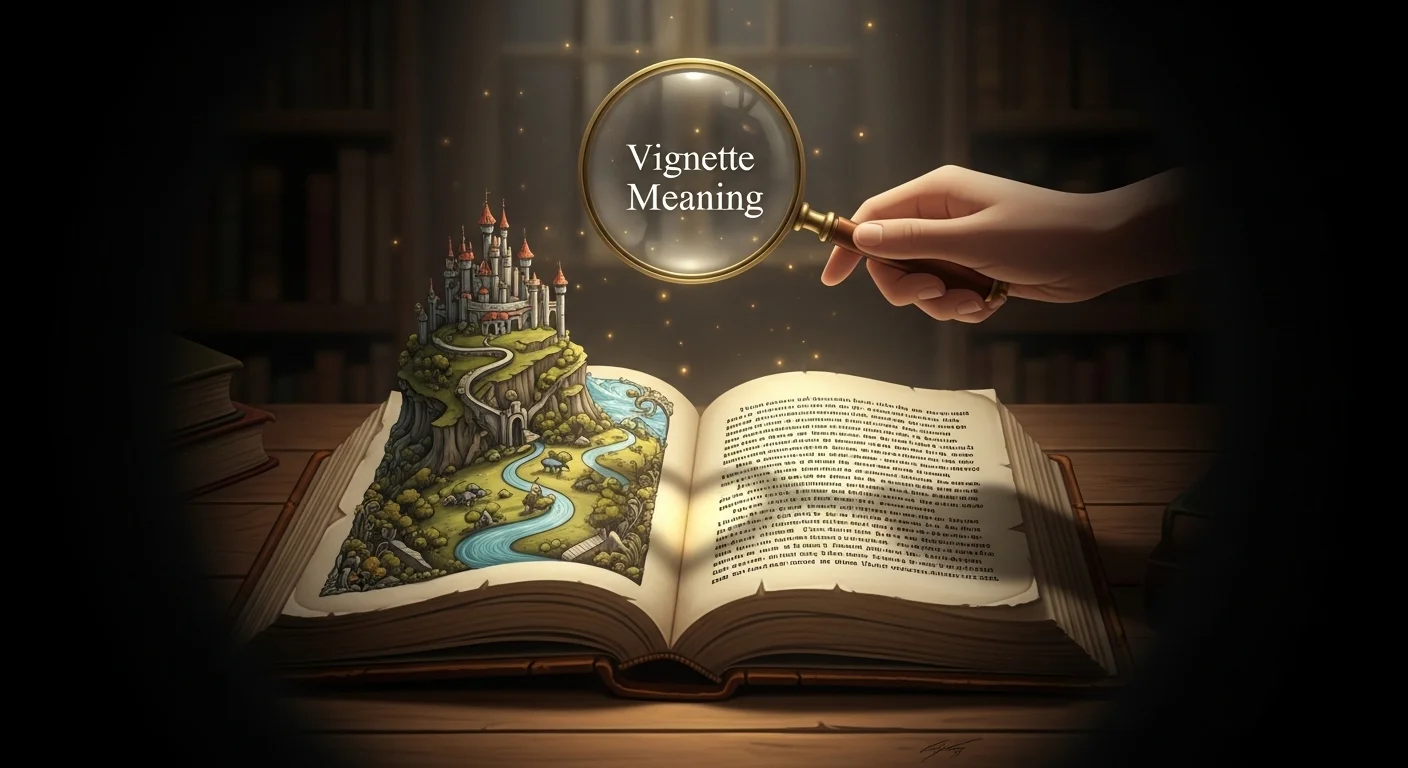
A brief but vivid description of a moment
A small scene from real life that feels meaningful or emotional
A snapshot of experience, not a full story
For example: “The author shared a vignette from her childhood that perfectly explained why she loves the sea.”
Real-Life Examples of “Vignette” in Sentences
“The book is made up of short vignettes about life in the city.”
“That quiet scene in the movie felt like a vignette—small, but powerful.”
“The photographer added a vignette effect to make the subject stand out.”
“He told a brief vignette about his first day at work instead of the whole story.”
Common Mistakes and Misunderstandings
Thinking a vignette is a full story: It’s usually partial and focused, not complete.
Using it only for photography: The word is also widely used in literature and film.
Confusing it with a summary: A vignette is not a summary—it’s a moment.
Overusing it in casual talk: It’s a useful word, but it sounds more natural in writing, art, or thoughtful conversation.
Related Words and Concepts
Snapshot: A quick look at a moment (similar idea in everyday language)
Scene: A part of a story, though usually longer than a vignette
Sketch: A brief, rough description or idea
Tableau: A fixed or frozen scene, often visual
Montage: A series of short scenes or images put together
When Should You Use the Word “Vignette”?
Use vignette when you want to describe:
A short, focused scene in writing or film
A moment that shows mood or character more than plot
A visual effect in photography that highlights the center of an image
Avoid using it when you simply mean a full story, a long scene, or a detailed explanation.
Why Understanding “Vignette” Matters in 2026
You’ll see the word vignette in:
Books and literary reviews
Film and TV discussions
Photography and design tutorials
Essays, blogs, and creative writing
Knowing its meaning helps you understand art, media, and writing more clearly and use the word with confidence and accuracy.