
What Does Accoutrements Mean?
The word accoutrements refers to:
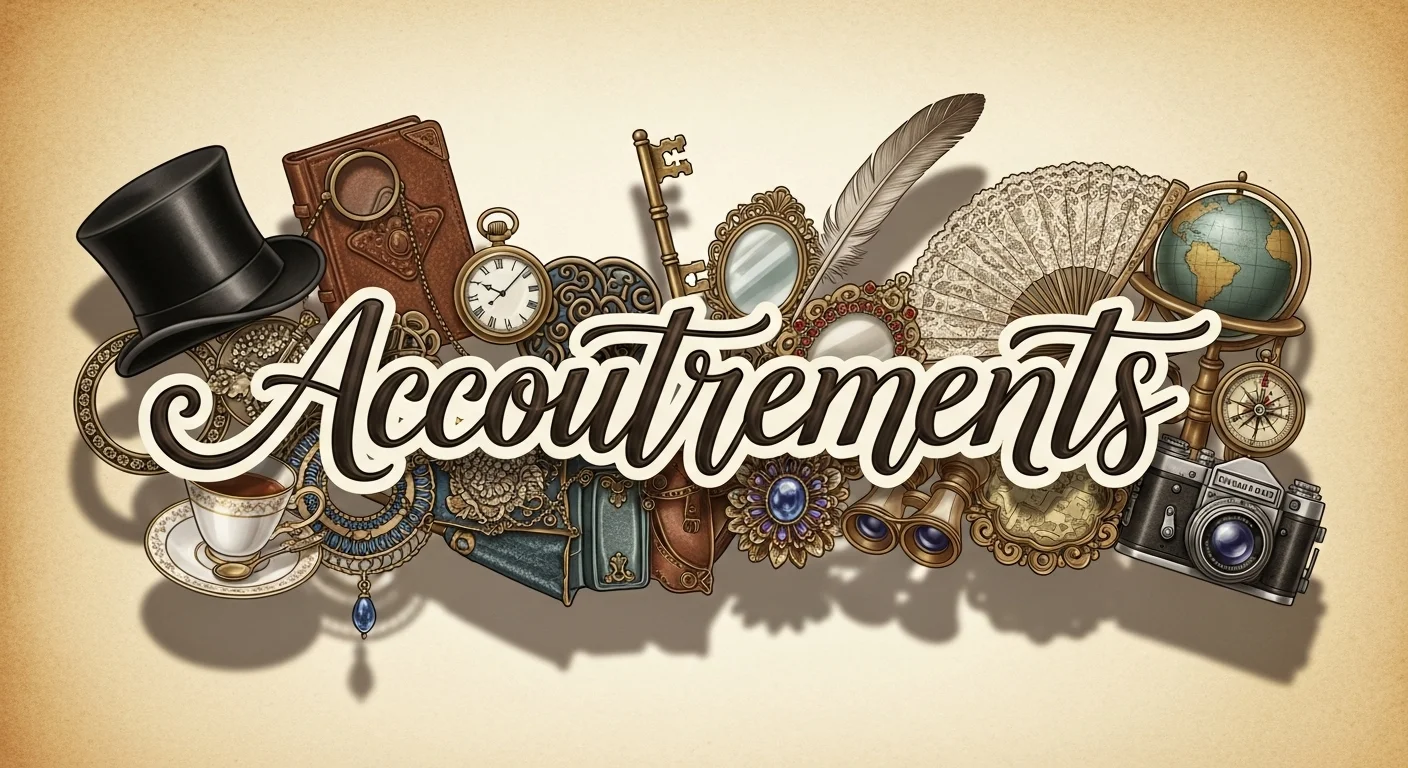
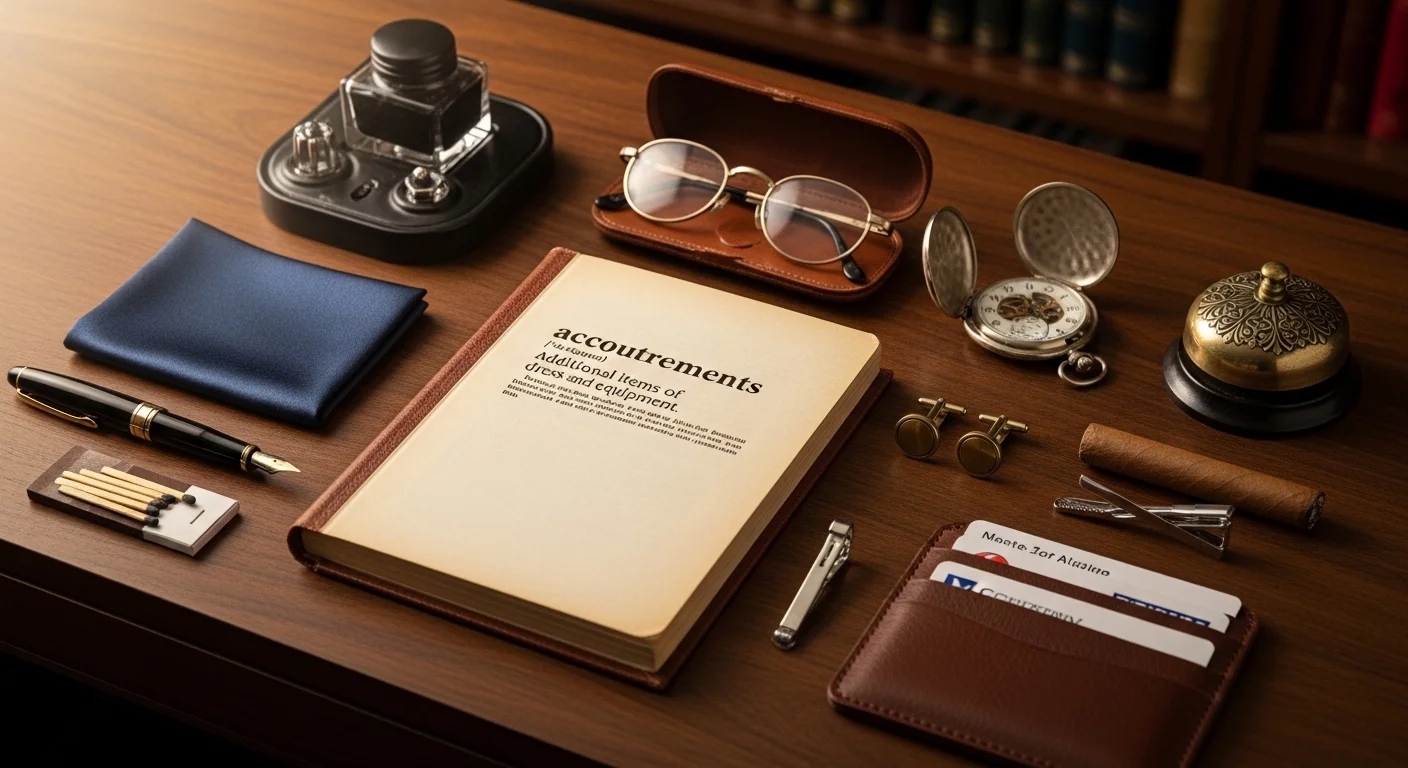
Additional items, accessories, or equipment that go along with something.
In simple terms, accoutrements are the extra things that complete or enhance a main item.
It usually describes supporting details rather than the main object itself.
Simple Definition in Everyday English
Accoutrements =
Accessories, extras, add-ons, or supporting items.
For example:
-
A burger with all the accoutrements
-
A soldier in full uniform with military accoutrements
-
A coffee bar with fancy accoutrements
The word often gives a slightly formal or elevated tone.
How to Pronounce Accoutrements
Many people hesitate because of the spelling.
It’s pronounced:
uh-KOO-truh-muhnts
Breakdown:
-
uh (like “a” in about)
-
KOO
-
truh
-
muhnts
The “cc” is silent in pronunciation. The word flows smoother than it looks.
Where Does the Word Come From?
Accoutrements comes from French.
It originated from the French word accoutrer, meaning:
-
To equip
-
To outfit
-
To dress up
It entered English in the 17th century and was originally used in military contexts.
Original Military Meaning
Historically, accoutrements referred to:
-
Military gear
-
Weapons
-
Equipment
-
Uniform accessories
For example:
A soldier’s belt, sword, and pouches were considered his accoutrements.
Over time, the word expanded beyond the military.
Modern Meaning of Accoutrements
Today, accoutrements can refer to almost any extra items that support a main object.
Common examples include:
-
Fashion accessories
-
Cooking extras
-
Sports gear
-
Decorative elements
-
Professional tools
The word feels polished and slightly formal.
Example Sentences Using Accoutrements
Here are clear examples to make it stick:
-
The chef prepared the steak with all the proper accoutrements.
-
The photographer arrived with cameras and various accoutrements.
-
She set up her desk with stylish accoutrements.
-
The picnic basket included sandwiches and all the necessary accoutrements.
Notice how the word often describes extras that complete something.
Is Accoutrements Always Plural?
Yes, most of the time.
“Accoutrements” is commonly used in the plural form because it refers to multiple supporting items.
The singular form “accoutrement” exists but is rarely used in everyday conversation.
When Should You Use Accoutrements?
Use accoutrements when:
-
You want a more refined word for “extras”
-
You’re describing decorative or supporting items
-
You want to sound formal or descriptive
It works well in writing, speeches, and professional contexts.

When Not to Use Accoutrements
Avoid using accoutrements if:
-
You’re speaking casually with friends
-
Simpler words like “extras” work better
-
You’re trying to keep language very basic
It can sound overly formal in everyday chat.
Accoutrements vs Accessories
People often ask if these words are the same.
They are similar, but not identical.
Accessories usually refer to fashion or design items.
Accoutrements can refer to:
-
Equipment
-
Tools
-
Decorative elements
-
Supporting items in any context
Accoutrements is broader and slightly more sophisticated.
Accoutrements in Food Context
In restaurants, the word is often used when describing food presentation.
For example:
A baked potato with butter, sour cream, chives, and bacon bits might be described as served with “all the accoutrements.”
Here, it means toppings and extras.
Accoutrements in Fashion
In fashion, accoutrements could include:
-
Jewelry
-
Hats
-
Belts
-
Scarves
-
Bags
They are not the outfit itself — they enhance it.
Accoutrements in Professional Settings
In business or creative fields, accoutrements might include:
-
Tools
-
Gadgets
-
Software add-ons
-
Presentation materials
For example:
A podcaster’s microphones, headphones, and sound panels could be described as studio accoutrements.
Why the Word Sounds Fancy
Because of its French origin and complex spelling, accoutrements often feels elevated or literary.
Writers use it to:
-
Add sophistication
-
Create vivid descriptions
-
Avoid repeating “extras”
It carries a polished tone.
Common Misspellings
Because it’s tricky, people often spell it incorrectly.
Common mistakes include:
-
accoutrements
-
accoutremonts
-
acoutrements
-
accutriments
The correct spelling is:
A-C-C-O-U-T-R-E-M-E-N-T-S
Synonyms for Accoutrements
If you want alternatives, here are simpler options:
-
Accessories
-
Extras
-
Add-ons
-
Equipment
-
Gear
-
Supplies
-
Trimmings
Choose based on context.
Is Accoutrements a Positive Word?
Yes, generally.
It usually implies something thoughtful, detailed, or well-prepared.
It doesn’t carry negative meaning unless used sarcastically.
Why Learn Words Like Accoutrements?
Learning words like accoutrements helps you:
-
Improve vocabulary
-
Sound more articulate
-
Understand formal writing
-
Expand descriptive ability
It’s especially useful in academic, professional, or creative writing.