
What Does Trait Mean?
A trait is a characteristic or quality that defines a person, animal, or object.
In simple words:
Trait = a distinguishing feature or characteristic
Traits can be:
Physical (e.g., eye color)
Behavioral (e.g., honesty)
Emotional (e.g., patience)
Trait Meaning in Simple English
Traits help us describe people or things
They can be inherited or developed over time
Traits are often used in psychology, biology, and everyday language
Personality Traits
Personality traits are qualities that define a person’s behavior and attitude.
Examples:
Honest
Friendly
Shy
Confident
Ambitious
These traits influence how people interact with others.
Physical Traits
Physical traits refer to characteristics you can see or measure.
Examples:
Hair color
Eye color
Height
Facial features
Skin tone
Physical traits are often inherited from family.
Emotional Traits
Emotional traits define how a person feels or reacts.
Examples:
Patience
Empathy
Sensitivity
Resilience
Optimism
They shape a person’s emotional intelligence.
Behavioral Traits
Behavioral traits describe how a person acts in different situations.
Examples:
Punctuality
Responsibility
Generosity
Leadership
Creativity
These traits are often observed in daily life.

Genetic Traits
Some traits are genetic, meaning they are passed down from parents.
Examples:
Eye color
Hair texture
Dimples
Certain talents or predispositions
Genetic traits are studied in biology and heredity.
Environmental Traits
Some traits develop due to environment and experiences.
Examples:
Communication skills
Confidence
Social behavior
Interests or hobbies
Environmental traits are influenced by upbringing and surroundings.
Common Misunderstandings About Trait
Trait is not only personality — it can be physical or behavioral
Not all traits are inherited; some are learned
Trait is not always permanent; some can change over time
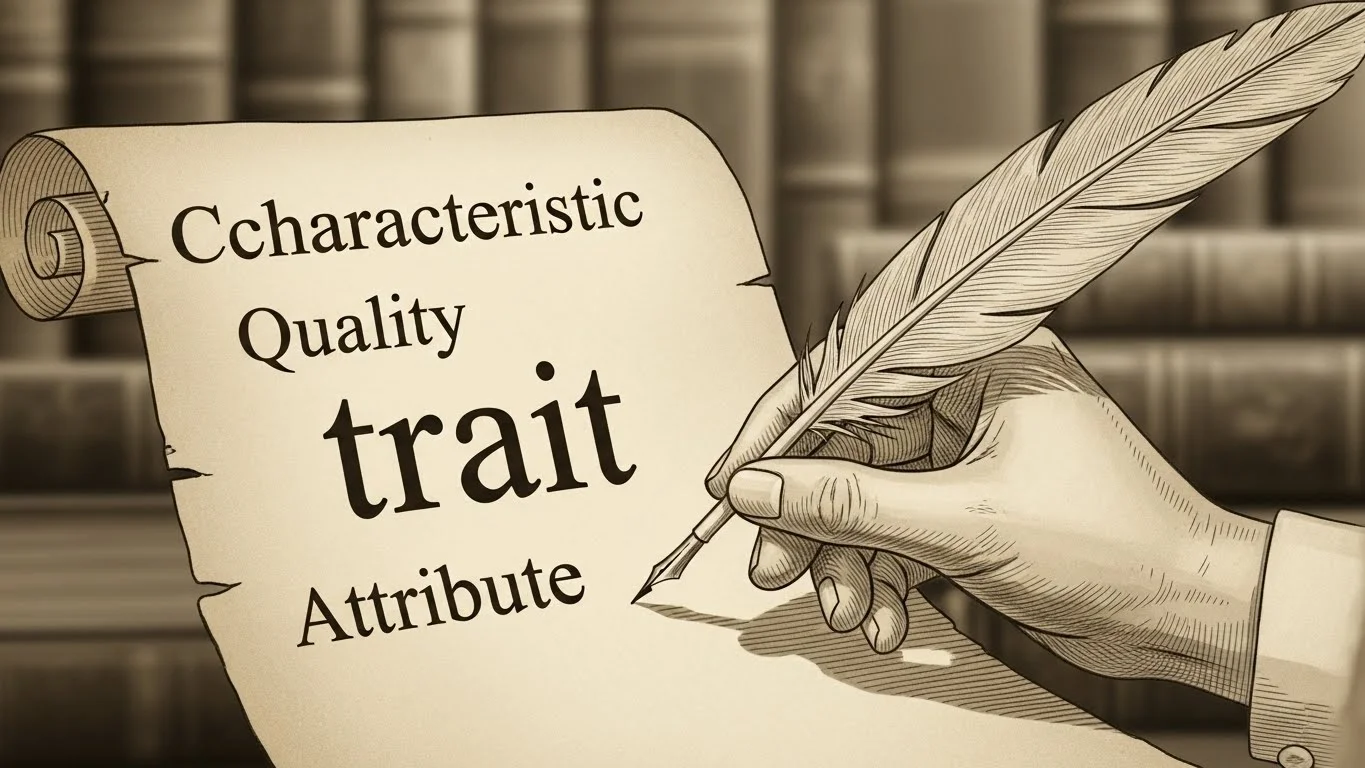
Synonyms of Trait
Characteristic
Feature
Quality
Attribute
Property
These words can be used interchangeably depending on context.
Examples of Trait in Sentences
“Honesty is an important trait in a friend.”
“Blue eyes are a common trait in his family.”
“Her leadership trait helped the team succeed.”
“Patience is a valuable emotional trait.”