
What Is Adjusted Gross Income?
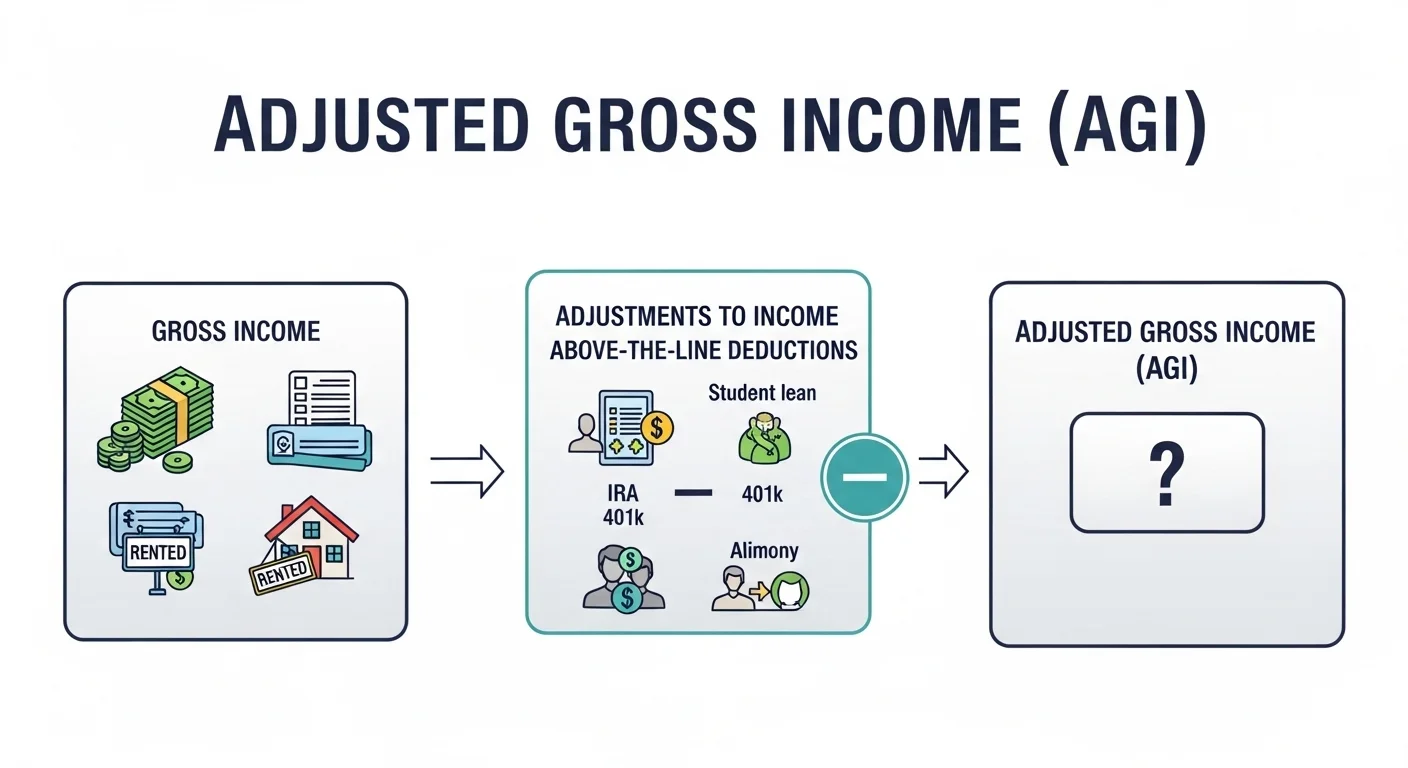
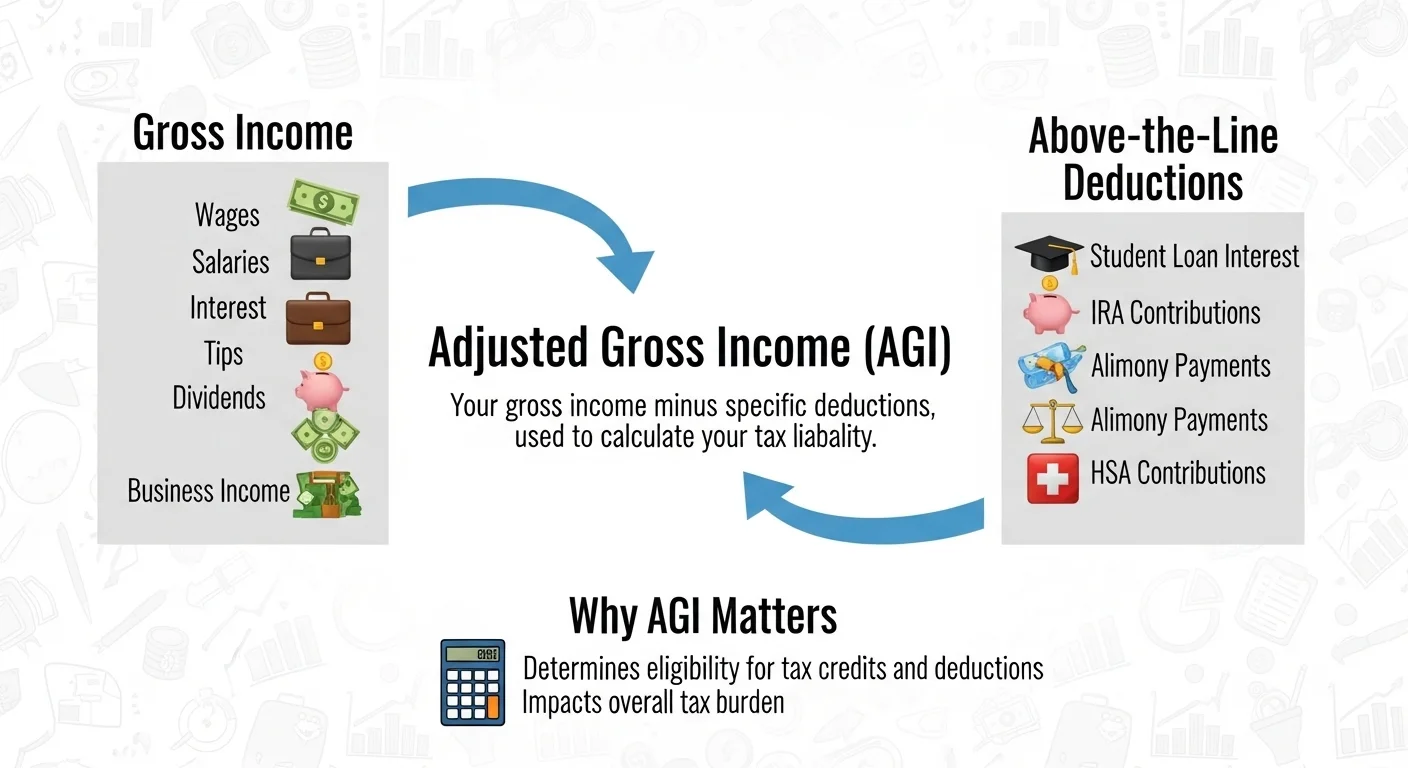
Adjusted Gross Income (AGI) is your total income for the year minus certain specific deductions allowed by tax law.
In simple terms:
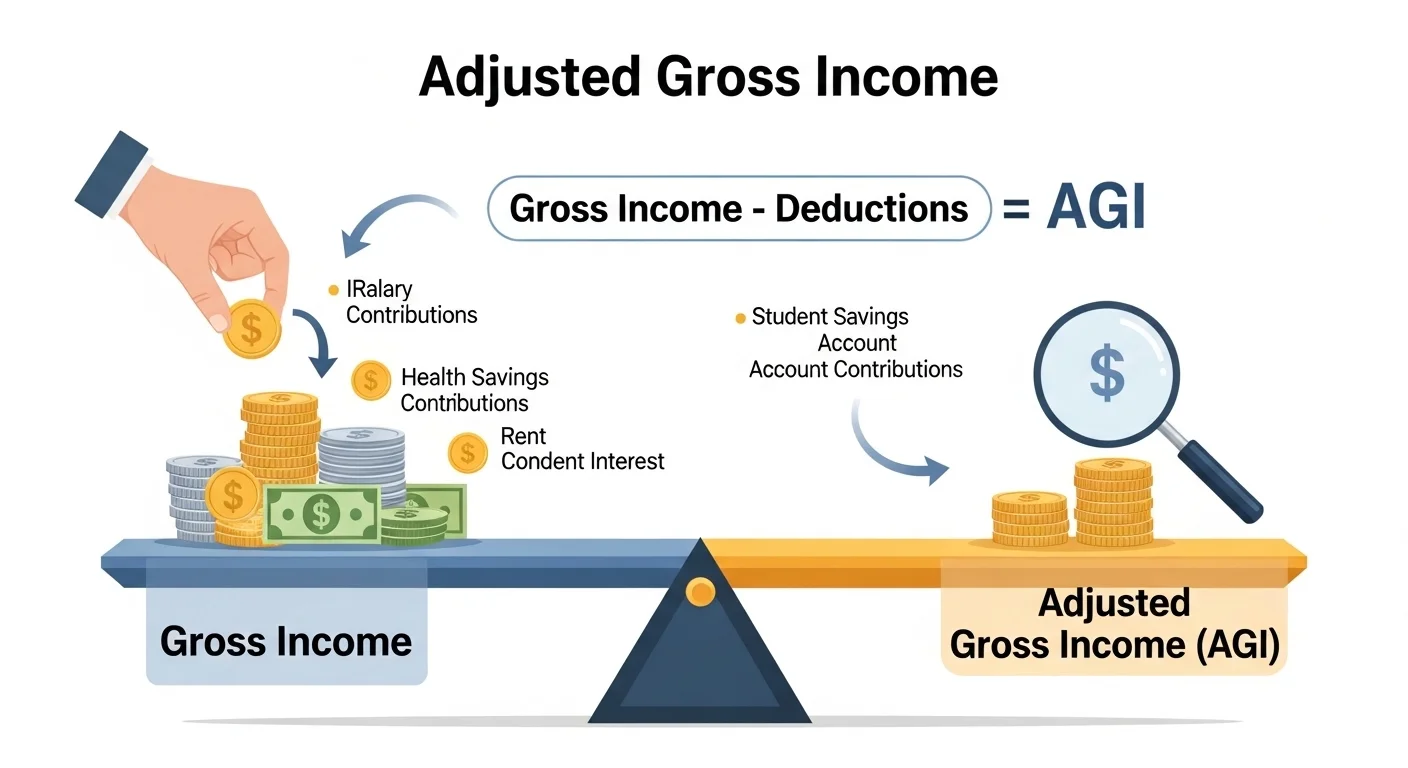
AGI = Total income – Eligible adjustments
It’s not your final taxable income, but it’s a very important number used to determine:
-
Your tax bracket
-
Your eligibility for credits
-
Your ability to claim deductions
-
Financial aid qualifications
What Does “Gross Income” Mean?
Before we understand AGI, we need to understand gross income.
Gross income is all the money you earn in a year before taxes or deductions.
This can include:
-
Salary or wages
-
Self-employment income
-
Business income
-
Rental income
-
Interest and dividends
-
Capital gains
-
Unemployment income
It’s the starting point.
What Does “Adjusted” Mean?
The word “adjusted” refers to certain deductions that reduce your gross income.
These are sometimes called:
-
Above-the-line deductions
-
Income adjustments
They are subtracted before calculating your taxable income.
That’s why it’s called adjusted gross income.
How Is Adjusted Gross Income Calculated?
Here’s the basic formula:
Total Income – Adjustments = Adjusted Gross Income
Example:
If you earned $60,000 in total income and had $5,000 in eligible deductions:
Your AGI would be $55,000.
It’s that simple in concept — though the details can vary.
Common Adjustments That Reduce Gross Income
Some common adjustments include:
-
Student loan interest deduction
-
Contributions to traditional IRA accounts
-
Self-employed health insurance premiums
-
Educator expenses
-
Certain business expenses
These deductions lower your AGI before other tax calculations begin.
Why Is Adjusted Gross Income Important?
AGI is one of the most important numbers on your tax return.
It determines:
-
Your eligibility for tax credits
-
Your ability to deduct medical expenses
-
Your eligibility for education credits
-
Income-based tax benefits
-
Financial aid (FAFSA calculations)
Many tax benefits phase out once your AGI reaches certain levels.
AGI vs Taxable Income
Many people confuse these two terms.
Here’s the difference:
Adjusted Gross Income (AGI)
Income after certain adjustments but before standard or itemized deductions.
Taxable Income
Income after subtracting:
-
Standard deduction OR itemized deductions
-
Qualified business income deduction (if applicable)
Taxable income is usually lower than AGI.
AGI vs Gross Income
Let’s compare clearly:
Gross Income
Total earnings before any deductions.
Adjusted Gross Income
Gross income minus specific adjustments.
Taxable Income
AGI minus standard or itemized deductions.
Each step moves lower.
Where Do You Find AGI on a Tax Return?
In the United States, AGI is shown on IRS Form 1040.
It is a clearly labeled line on the tax return form.
When filing electronically, you may also need your prior-year AGI to verify your identity.
Why Financial Aid Uses AGI
Financial aid programs, including FAFSA, use AGI to determine:
-
Financial need
-
Grant eligibility
-
Subsidized loan eligibility
AGI gives a clearer picture than gross income because it accounts for certain financial realities.
 Does AGI Affect Tax Credits?
Yes, heavily.
Many credits depend on AGI thresholds, including:
-
Child Tax Credit
-
Education credits
-
Retirement savings credit
If your AGI is too high, some credits are reduced or eliminated.
Can You Lower Your AGI?
Yes, legally.
Some ways include:
-
Contributing to traditional retirement accounts
-
Making Health Savings Account (HSA) contributions
-
Deducting student loan interest
-
Claiming eligible self-employment deductions
Lower AGI can increase tax benefits.
What Is Modified Adjusted Gross Income (MAGI)?
You may also see Modified Adjusted Gross Income (MAGI).
MAGI is:
AGI plus certain items added back in.
It’s used for specific programs such as:
-
IRA contribution limits
-
Healthcare premium credits
MAGI calculations vary depending on the situation.
Why AGI Matters for Medical Deductions
Medical expenses are deductible only if they exceed a percentage of your AGI.
So a lower AGI can make it easier to qualify for certain deductions.
Does AGI Affect State Taxes?
In many states, yes.
Some state tax systems use federal AGI as a starting point for state income calculations.
Is Adjusted Gross Income the Same as Take-Home Pay?
No.
Take-home pay is:
Your paycheck after taxes and other deductions.
AGI is:
A tax calculation figure that may not reflect what you physically received.
They are very different numbers.
Is AGI Before or After Taxes?
AGI is calculated before:
-
Standard deductions
-
Final tax liability
It’s part of the process before calculating how much tax you owe.
Common Misunderstandings About AGI
Many people think:
-
AGI equals salary
-
AGI equals taxable income
-
AGI equals net income
None of these are fully correct.
AGI is a specific tax calculation step.
Why the IRS Uses AGI
The Internal Revenue Service (IRS) uses AGI as a consistent baseline.
It allows:
-
Fair eligibility limits
-
Standardized credit phase-outs
-
Structured deduction limits
It creates uniform rules across income levels.
Real-World Example
Let’s say:
Total Income: $75,000
Student Loan Interest Deduction: $2,500
IRA Contribution: $3,000
AGI = $75,000 – $5,500
AGI = $69,500
From there, you apply standard or itemized deductions to determine taxable income.