
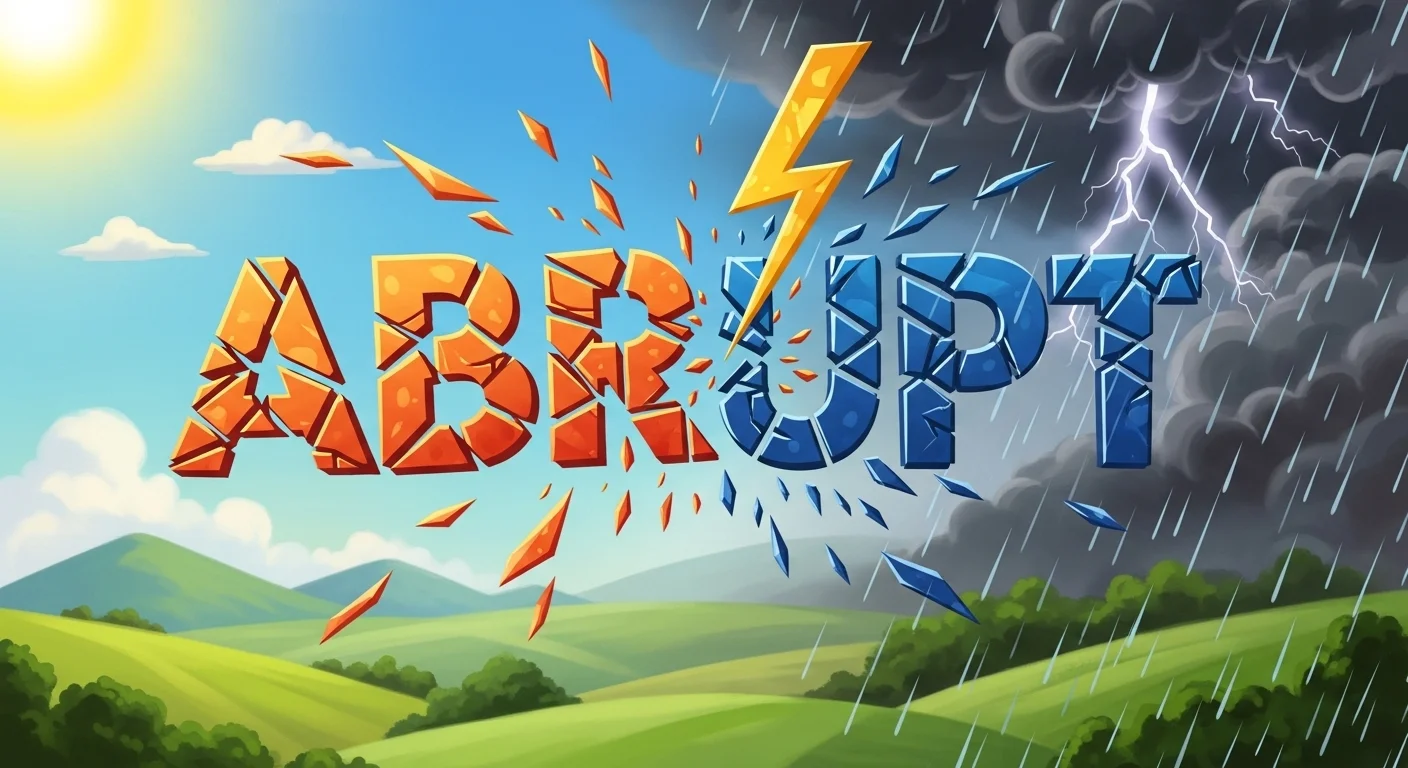

What Does Abrupt Mean?
Abrupt means sudden and unexpected, often in a way that feels sharp, rude, or lacking smoothness.
The word usually describes something that:
-
Happens quickly
-
Has no gradual transition
-
Feels harsh or direct
It can describe actions, changes, speech, or behavior.
Abrupt Meaning in Simple Terms
Think of abrupt as:
“Too fast and not smooth.”
It often gives the feeling that something ended or changed without warning.
Examples of Abrupt in a Sentence
Here are some clear examples:
-
“The meeting came to an abrupt end.”
-
“She gave an abrupt reply and walked away.”
-
“There was an abrupt change in the weather.”
-
“His abrupt tone surprised everyone.”
In each case, something happened suddenly or sharply.
Abrupt in Conversations
When used to describe speech, abrupt often means:
-
Short
-
Direct
-
Possibly rude
-
Lacking warmth
For example:
If someone says, “No.” and walks away without explanation, that could be described as abrupt.
It doesn’t always mean intentionally rude — just very brief and sudden.
Abrupt in Emotional Situations
In relationships or friendships, abrupt can describe:
-
Ending contact suddenly
-
Leaving without explanation
-
Giving very short responses
For example:
“He made an abrupt decision to quit.”
That means the decision happened suddenly, possibly without discussion.
Abrupt vs Sudden
These words are similar but not identical.
Sudden simply means happening quickly.
Abrupt means sudden plus sharp or unexpected in tone or manner.
Example:
Sudden rain
Abrupt goodbye
The second feels emotionally sharper.
Abrupt vs Rude
Not all abrupt behavior is rude.
Abrupt focuses more on speed and lack of smooth transition.
Rude focuses on disrespect.
However, abrupt behavior can feel rude depending on context.
Abrupt in News and Media
You might see phrases like:
-
“An abrupt policy change.”
-
“The CEO made an abrupt announcement.”
-
“There was an abrupt halt in production.”
In these cases, abrupt emphasizes that something changed quickly without warning.

Abrupt Changes in Nature
Abrupt is often used to describe natural changes, such as:
-
Abrupt temperature drops
-
Abrupt storms
-
Abrupt climate shifts
It highlights the suddenness of the change.
Abrupt Personality Traits
When describing a person, abrupt may mean:
-
Straight to the point
-
Not very expressive
-
Very direct
-
Quick in responses
For example:
“He’s very knowledgeable, but his communication style is abrupt.”
This suggests he speaks quickly and directly.
Is Abrupt Always Negative?
Not always.
It can simply describe speed.
However, it often carries a slightly negative tone because it suggests lack of smoothness or sensitivity.
Context determines whether it feels critical.
Synonyms of Abrupt
Here are common synonyms:
-
Sudden
-
Sharp
-
Quick
-
Brief
-
Blunt
-
Unexpected
Each has slightly different emotional tone.
Antonyms of Abrupt
Opposites of abrupt include:
-
Gradual
-
Smooth
-
Gentle
-
Polite
-
Calm
These suggest slower, softer transitions.
Pronunciation of Abrupt
Abrupt is pronounced:
uh-BRUPT
The stress is on the second syllable.
Where Does the Word Come From?
Abrupt comes from Latin roots meaning “broken off.”
That original meaning connects directly to the modern idea of something stopping or changing suddenly.
Abrupt in Writing
In storytelling or writing, an abrupt ending means:
-
The story ends quickly
-
There is no clear resolution
-
The transition feels sudden
Example:
“The movie had an abrupt ending.”
This means it ended without a smooth conclusion.
Abrupt in Business Situations
In professional settings, abrupt behavior can mean:
-
Short emails
-
Immediate decisions
-
Fast changes in plans
Example:
“The manager gave an abrupt response.”
This suggests the reply was quick and possibly lacking explanation.
Emotional Impact of Abrupt Actions
Abrupt actions can make people feel:
-
Confused
-
Surprised
-
Hurt
-
Unprepared
That’s because humans often expect gradual transitions.
Common Mistakes When Using Abrupt
Using it to mean “angry”
Abrupt does not automatically mean angry.
Using it for slow changes
Abrupt always implies speed and lack of smoothness.
Confusing it with “corrupt”
The words sound different and have completely different meanings.

Why Understanding Abrupt Matters
Knowing the meaning helps you:
-
Describe behavior accurately
-
Understand tone in conversations
-
Improve your writing
-
Avoid misinterpreting someone’s communication style
It’s a small word with a strong impact.