
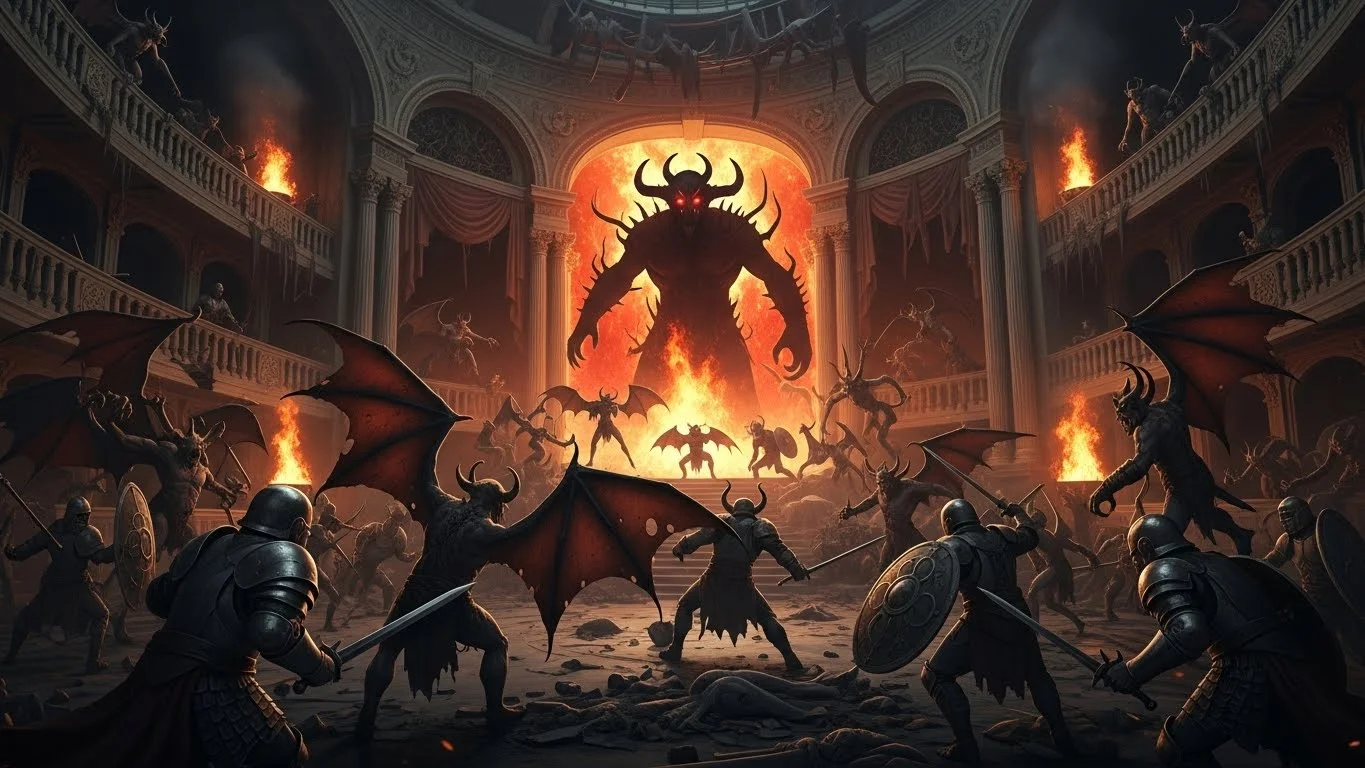

What Does Pandemonium Mean?
Pandemonium means a situation of wild noise, confusion, disorder, or chaos.
In simple words:
Pandemonium = complete chaos where everything feels loud and uncontrolled.
Pandemonium Meaning in Simple English
A state of extreme confusion
Lots of noise and disorder
People moving, shouting, or reacting at once
It often describes crowds, emergencies, celebrations, or sudden events.
Origin of the Word Pandemonium
Coined by poet John Milton in Paradise Lost
Originally meant “the capital of Hell”
Later evolved to mean chaos and uproar in general use
This origin explains why the word feels so intense.
Pandemonium in Everyday Life
You might use pandemonium when:
A fire alarm suddenly goes off
A celebrity appears unexpectedly
A fight breaks out in a crowd
Something shocking happens in public
Example:
“When the doors opened, pandemonium broke out.”
Pandemonium in News and Media
Journalists use pandemonium to describe dramatic scenes:
Stadium stampedes
Protest clashes
Emergency evacuations
Breaking news events
It helps readers imagine noise, panic, and confusion.
Pandemonium vs Chaos
Pandemonium: loud, emotional, crowded chaos
Chaos: general disorder, may be quiet or abstract
Pandemonium often includes noise and people reacting together.
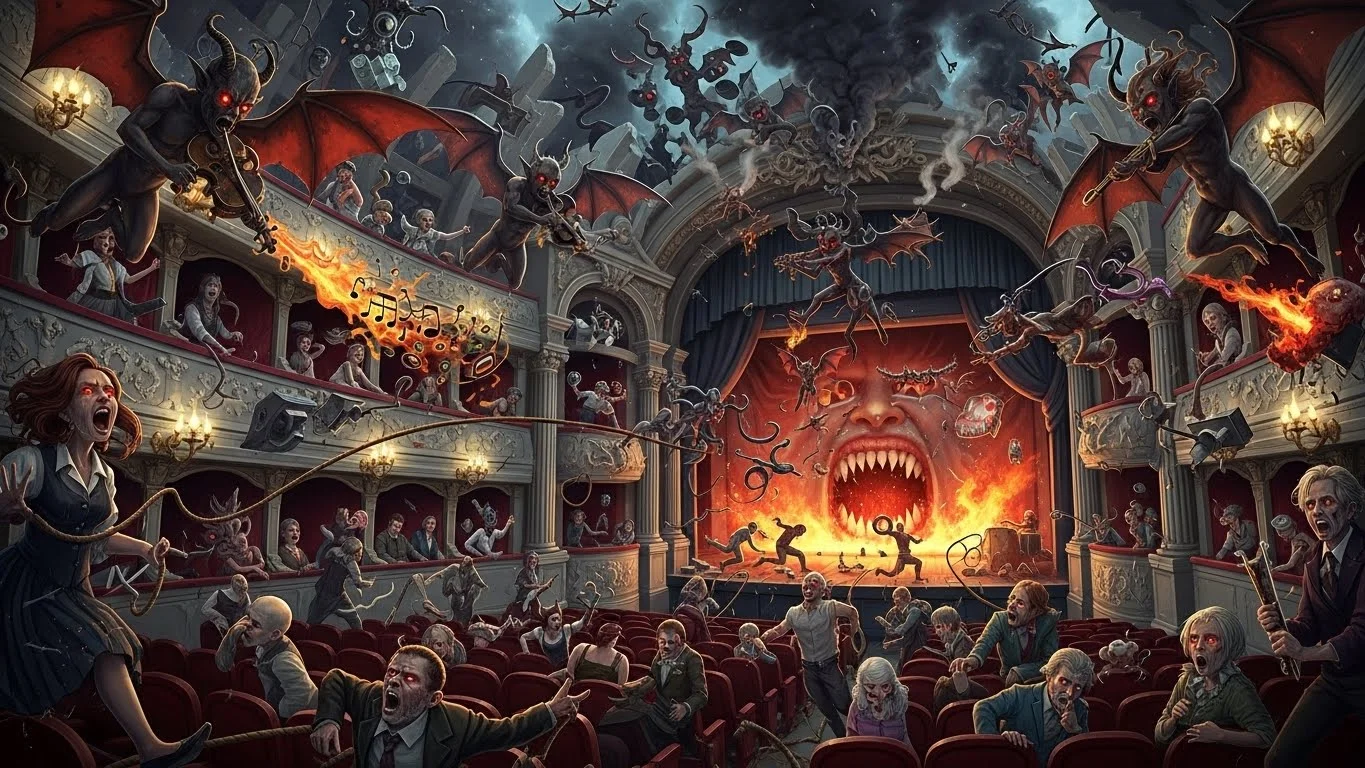
Emotional Tone of Pandemonium
Strong and dramatic
Often negative, but sometimes neutral or exciting
Can describe panic or excitement depending on context
Example:
Negative: “Pandemonium followed the explosion.”
Exciting: “Pandemonium erupted when the team won.”
Common Situations Described as Pandemonium
Concert crowds
Sports victories
Natural disasters
Emergency announcements
School or office evacuations
The word paints a vivid mental picture.
Synonyms of Pandemonium
Chaos
Uproar
Bedlam
Mayhem
Turmoil
Each has a slightly different intensity, but all imply disorder.
Opposite of Pandemonium
Calm
Order
Peace
Silence
Control
These describe situations with stability and quiet.
Examples of Pandemonium in Sentences
“Pandemonium erupted after the final whistle.”
“The sudden blackout caused pandemonium in the mall.”
“There was pandemonium in the classroom when the teacher left.”
“Social media was in pandemonium after the announcement.”
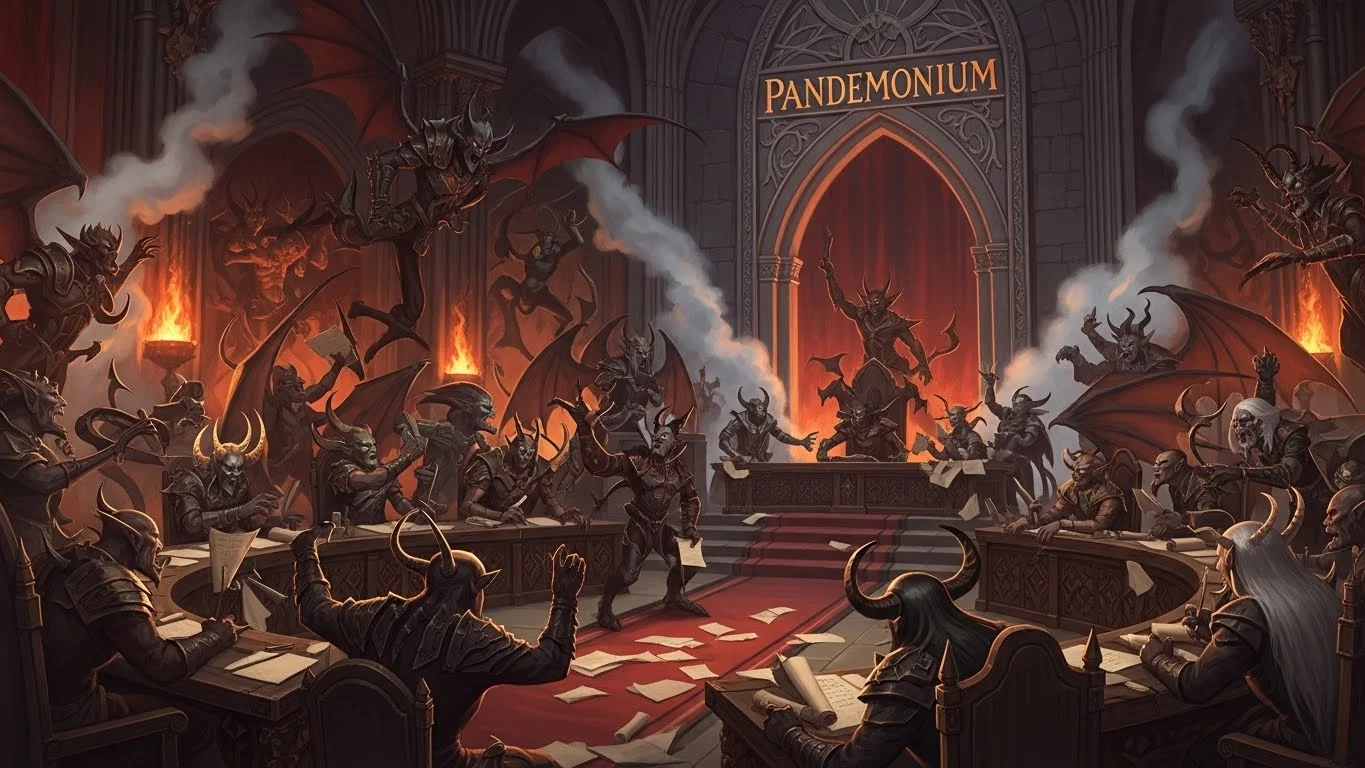
Common Misunderstandings About Pandemonium
It does not mean just “busy” — it means out-of-control busy
It’s not always negative; it can describe excitement
It’s stronger than simple noise or confusion