
What Does “NGL” Mean in Text?
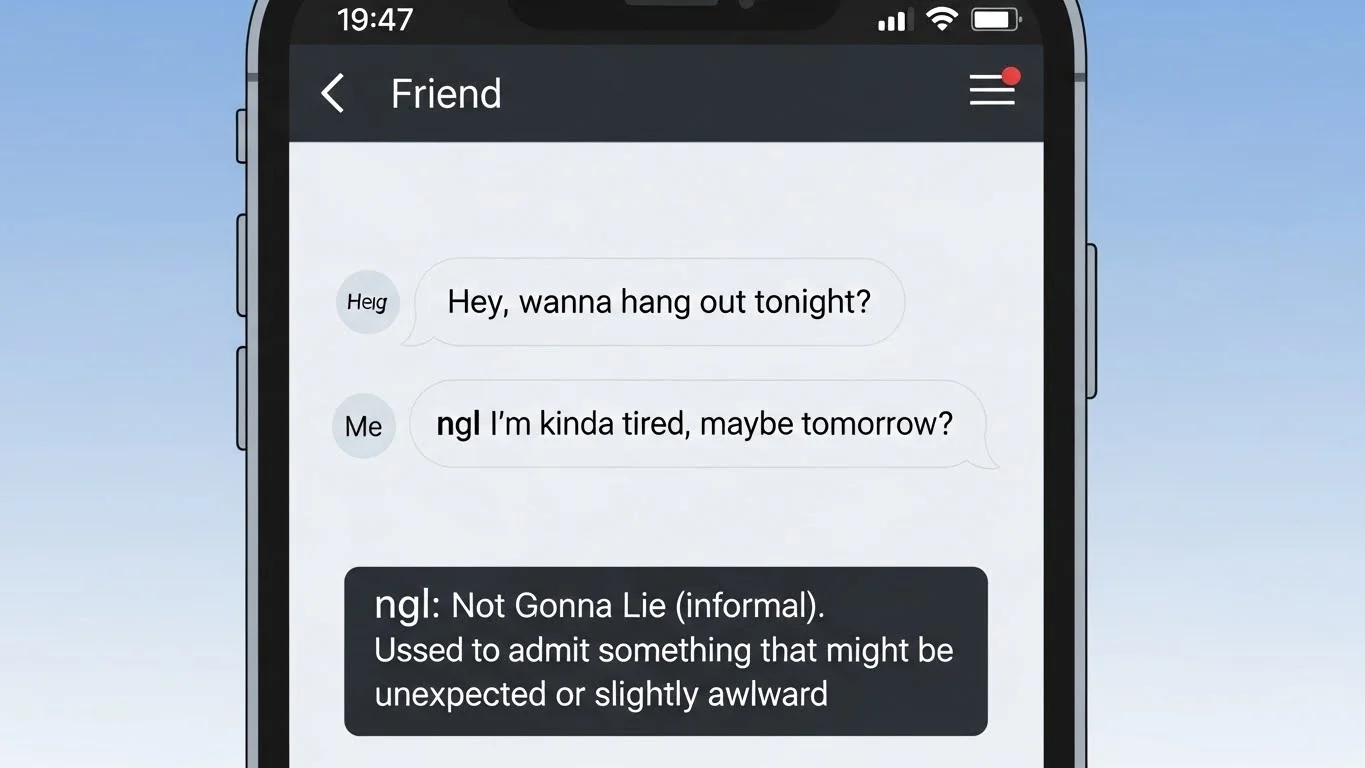
NGL stands for “Not Gonna Lie.”
In texting and online chat, people use NGL to introduce an honest thought, opinion, or feeling. It signals that the sender is being direct or real — sometimes softening criticism, sometimes adding emphasis.
In simple terms, NGL means “to be honest.”
Example idea:
“Ngl, that movie was actually really good.”
Here, NGL tells the reader that the speaker is sharing their genuine opinion.
NGL Meaning in Slang
In slang usage, NGL goes beyond just honesty. It often adds emotion, attitude, or emphasis to a sentence.
Depending on context, NGL can mean:
Honest but polite
Honest and blunt
Honest and slightly sarcastic
Honest and emotional
That’s why tone matters so much with this slang. The words after “ngl” decide whether it sounds friendly or harsh.
Origin & History of NGL
NGL comes from casual spoken English — “not gonna lie” — which people have said for decades in real-life conversations.
As texting became popular:
Long phrases were shortened
Casual speech moved online
“Not gonna lie” became NGL
It gained massive popularity through:
SMS texting
Twitter and Tumblr
Gaming chats
Gen Z social platforms like TikTok and Discord
By 2025, NGL is fully mainstream slang, understood across age groups online.
How People Use NGL in Real Life
People use NGL to:
Share honest opinions
Prepare someone for criticism
Express emotions without sounding too serious
Add drama or humor
Common ways it’s used:
Before an opinion
Before a confession
Before a complaint
Before praise
It acts like a warning sign that honesty is coming next.
When You Should Use NGL
NGL works best in casual and informal conversations, such as:
Chatting with friends
Group chats
Social media comments
Gaming or Discord chats
It fits when:
You want to sound real
You want to soften an opinion
You’re sharing feelings honestly
It’s okay to use when the conversation already feels relaxed and friendly.
Real Chat Examples of NGL
Example 1:
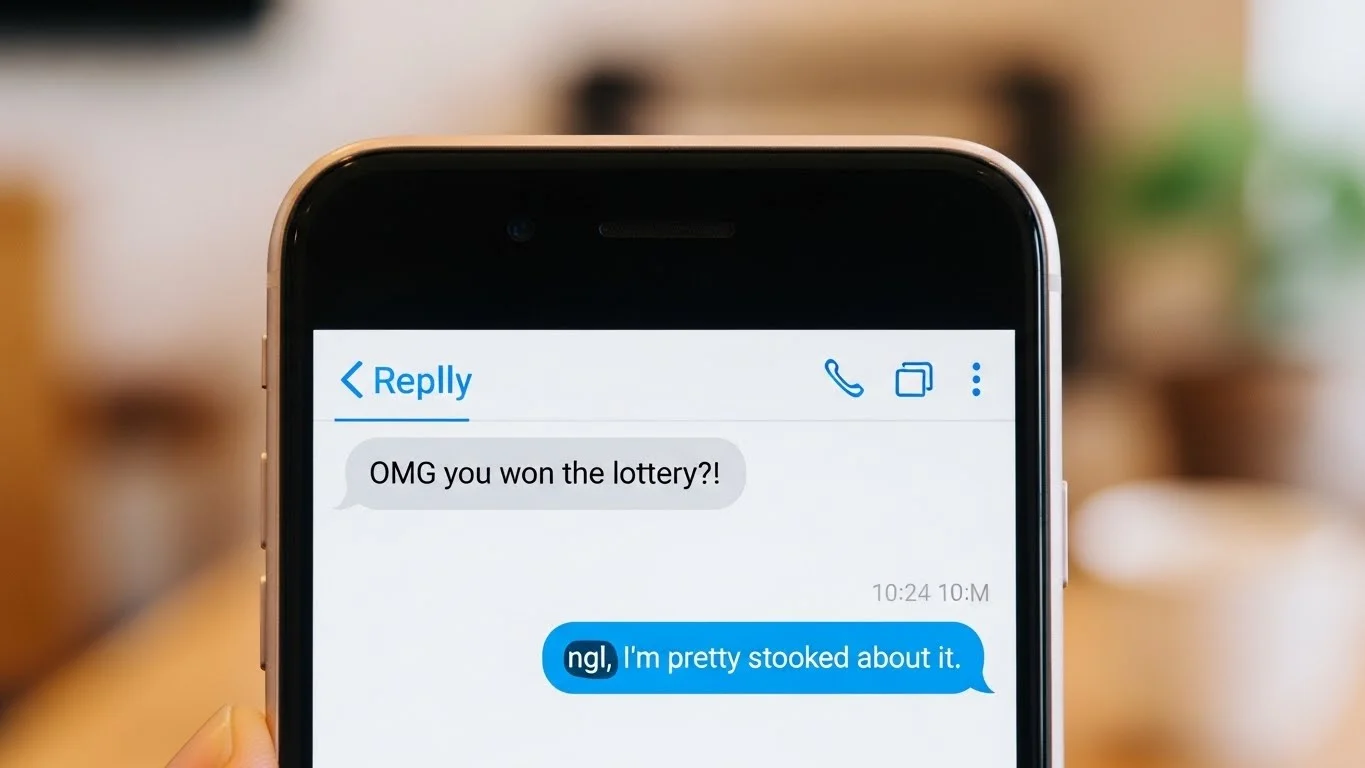
“ngl, I didn’t expect you to reply that fast.”
Explanation: Friendly honesty, slightly surprised tone.
Example 2:
“Ngl, that exam was brutal.”
Explanation: Honest emotional reaction.
Example 3:
“ngl you actually did a great job.”
Explanation: Honest praise, feels more genuine.
Example 4:
“Ngl, I’m kinda tired of this drama.”
Explanation: Honest frustration.
Example 5:
“ngl that song is stuck in my head.”
Explanation: Casual, relatable honesty.
NGL on Different Platforms
On WhatsApp and text messages, NGL is casual and friendly, usually lowercase.
On Instagram or TikTok comments, it’s often used for opinions or reactions.
On Discord and gaming chats, it’s extremely common and sometimes blunt.
On dating apps, NGL can be risky — it can sound honest or rude depending on wording.
Platform culture affects how NGL is received.
Common Mistakes & Confusion
One common mistake is thinking NGL always sounds polite. It doesn’t.
Problems happen when:
It’s used before harsh criticism
It’s sent without context
The reader doesn’t know your tone
Another mistake is overusing it. Too much “ngl” can make you sound negative or dramatic.
Is NGL Rude or Safe to Use?
NGL itself is not rude, but what comes after it matters a lot.
Safe use:
“Ngl, I appreciate you.”
“Ngl, that was helpful.”
Risky use:
“Ngl, that was dumb.”
“Ngl, you messed up.”
In professional or formal conversations, it’s better to avoid NGL completely.
Similar Slangs & Alternatives
If you don’t want to use NGL, you might see or use:
TBH – To be honest
IMO – In my opinion
FR – For real
Lowkey – Slightly or secretly
These serve similar purposes but carry different tones.
Why You Still See NGL in 2025
NGL is still popular because:
It’s short and fast
It sounds natural
It matches how people speak
It fits Gen Z and millennial tone
Unlike some slang that fades quickly, NGL has staying power because honesty never goes out of style.