


Tardy Meaning in English
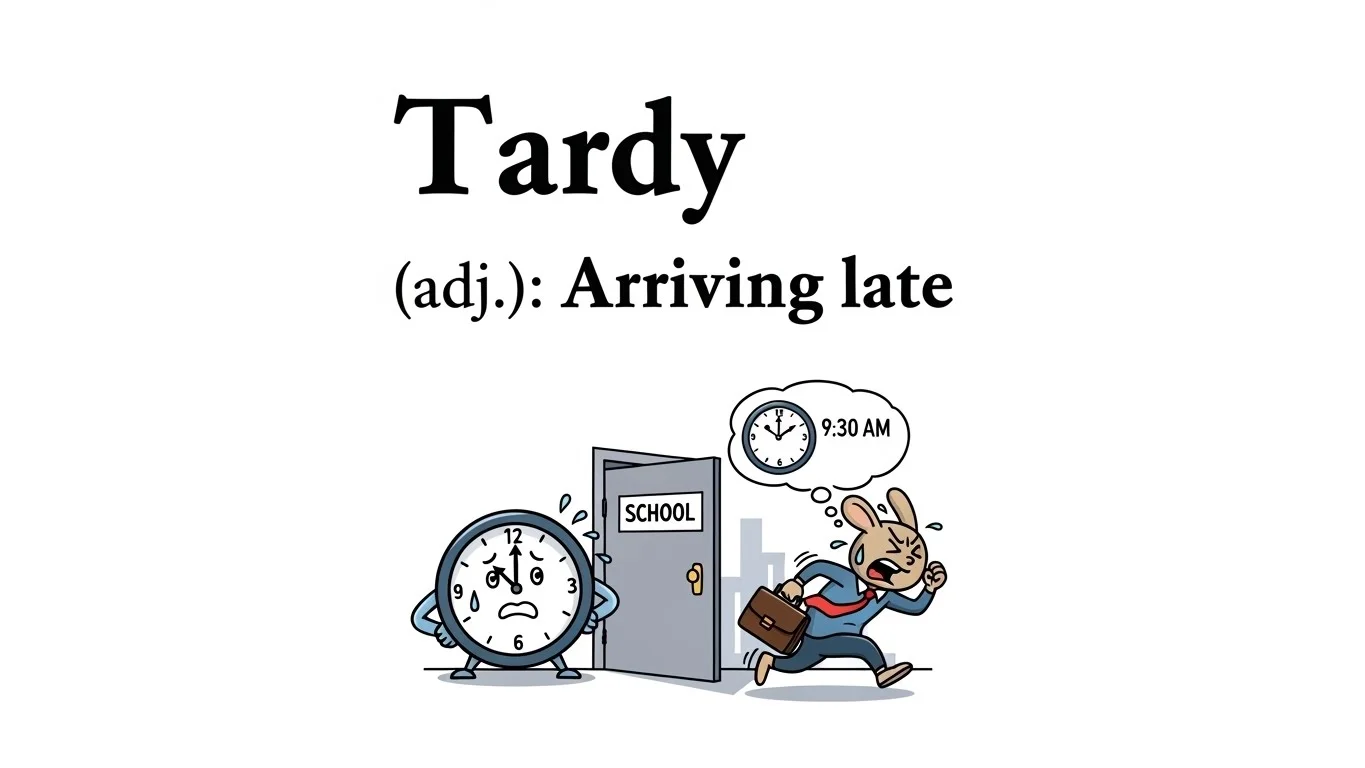
Tardy is an adjective that means:
Late or delayed
Not arriving at the expected time
Examples:
“She was tardy to class this morning.”
“Employees who are frequently tardy may face consequences.”
In short, tardy = late.
Tardy in Schools
In school contexts, tardy is often used to describe students who arrive late for class.
Teachers may record a tardy in attendance logs
Multiple tardies can affect grades or behavior records
Schools sometimes have tardy policies to encourage punctuality
Example:
“If you are tardy three times, you must stay after school.”
Tardy in the Workplace
At work, tardy refers to employees arriving late to meetings, shifts, or deadlines.
Frequent tardiness may impact performance reviews
Being tardy can reduce efficiency or team productivity
Some companies track tardy occurrences as part of HR policies
Example:
“Staff who are tardy more than twice a week will receive a warning.”
Tardy in Everyday Life
Even outside schools and offices, tardy is commonly used to describe:
Being late for appointments or events
Delayed deliveries or services
Any situation where punctuality is expected
Example:
“I was tardy to the party because of traffic.”
Tardy Synonyms
Words similar to tardy include:
Late
Delayed
Overdue
Behind schedule
Unpunctual
These can be used interchangeably depending on context.
Tardy Antonyms
The opposite of tardy includes:
Punctual
On time
Prompt
Early
Using these words can help contrast timeliness and lateness.
Common Misunderstandings
Tardy ≠ absent: A tardy person is late but still present
Not informal: Though common in schools, it’s also used formally in HR or official contexts
Tardy ≠ careless: Being tardy can happen unintentionally due to traffic or emergencies

Real-Life Examples of Tardy
“He was tardy to the meeting because of a delayed train.”
“Students who are tardy often miss important instructions.”
“The delivery was tardy, arriving two days later than promised.”