

What Does Friction Mean?
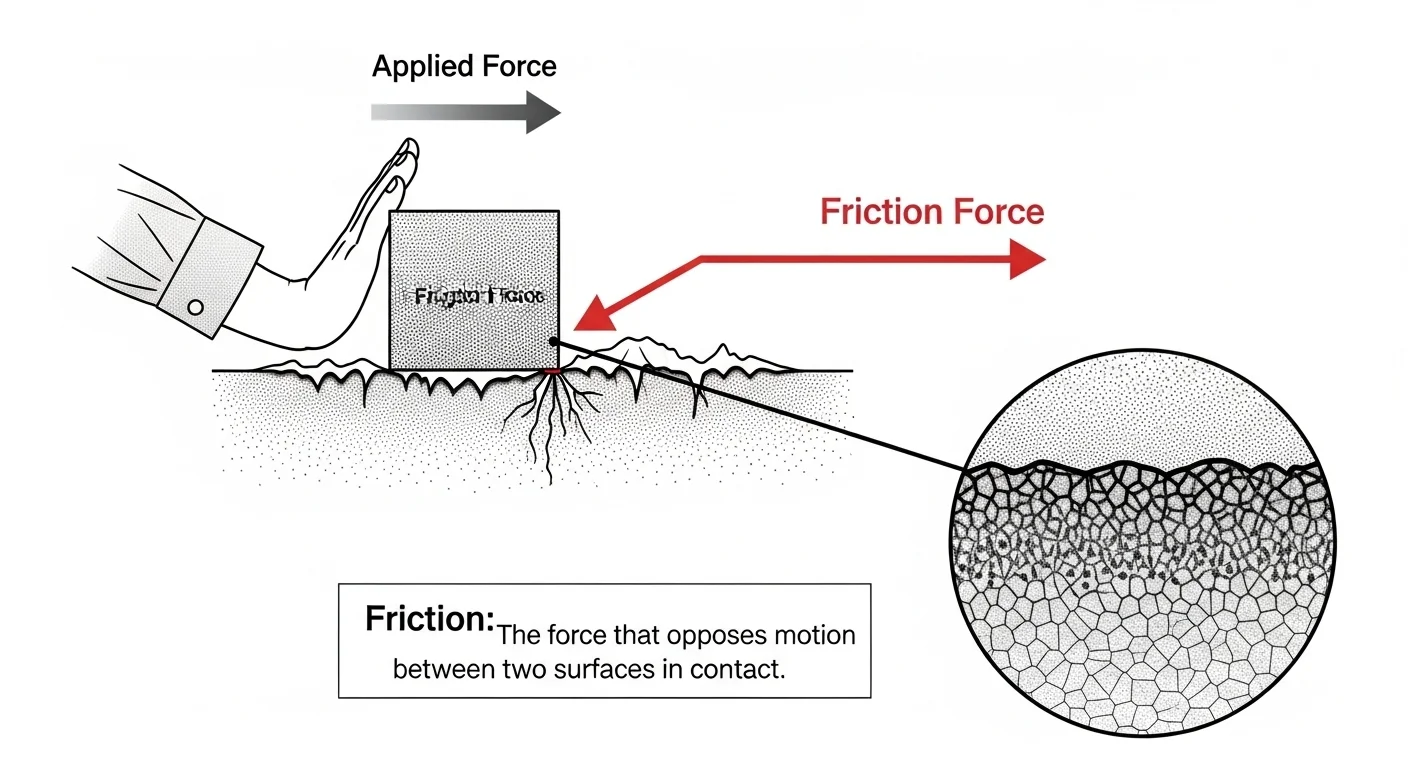
Friction is a force that resists motion when two surfaces touch each other.
When something moves across another surface, friction slows it down or stops it. Without friction, walking, driving, or even holding objects would be almost impossible.
In simple words:
Friction is what makes movement harder when things rub together.
Simple Definition of Friction
Friction is the force that opposes motion between two surfaces that are in contact.
It always acts opposite to the direction of movement.
Origin of the Word Friction
The word friction comes from the Latin word frictio, which means “to rub.”
This origin perfectly explains the concept — friction happens because surfaces rub against each other.
Friction Meaning in Physics
In physics, friction is a contact force that occurs when two objects touch.
It depends on:
The type of surfaces
How rough or smooth they are
The force pressing them together
More roughness usually means more friction.
Types of Friction
There are different kinds of friction you may hear about:
Static friction – prevents motion from starting
Sliding friction – occurs when objects slide
Rolling friction – happens when objects roll
Air friction – resistance caused by air
Each type affects motion in a different way.
Friction Meaning in Daily Life
Friction plays a role in almost everything we do.
Examples include:
Walking without slipping
Braking a car
Writing with a pen
Holding objects
Lighting a match
Without friction, daily life would be extremely difficult.
Friction Meaning in Human Relationships
Outside science, friction is often used metaphorically.
It means:
Tension
Disagreement
Conflict
Emotional resistance
For example:
“There is friction between the team members.”
Here, friction means conflict, not physical rubbing.

Advantages of Friction
Friction is not always bad. In fact, it is very useful.
Benefits of friction include:
Helps us walk and run
Allows vehicles to stop
Makes writing possible
Provides grip and control
Life without friction would be dangerous.
Disadvantages of Friction
Too much friction can also cause problems.
Disadvantages include:
Wear and tear of machines
Heat generation
Energy loss
Reduced efficiency
That’s why machines use oil or grease to reduce friction.
Real-Life Examples of Friction
Example 1:
A ball slowly stops rolling because of friction with the ground.
Example 2:
Shoes grip the floor due to friction, preventing slips.
Example 3:
Rubbing hands together creates heat because of friction.
Each example shows friction in action.
Common Mistakes & Misunderstandings
People often misunderstand friction.
Common mistakes include:
Thinking friction always slows things (it can also help movement)
Believing friction only exists in physics
Confusing friction with pressure or force
Friction is a specific force with specific effects.

Related Science Terms
If you’re learning about friction, these terms are often connected:
Force – push or pull
Motion – movement of objects
Gravity – force pulling objects downward
Resistance – opposition to motion
Surface roughness – affects friction level
These concepts work together in physics.