
What Does Mistrial Mean?
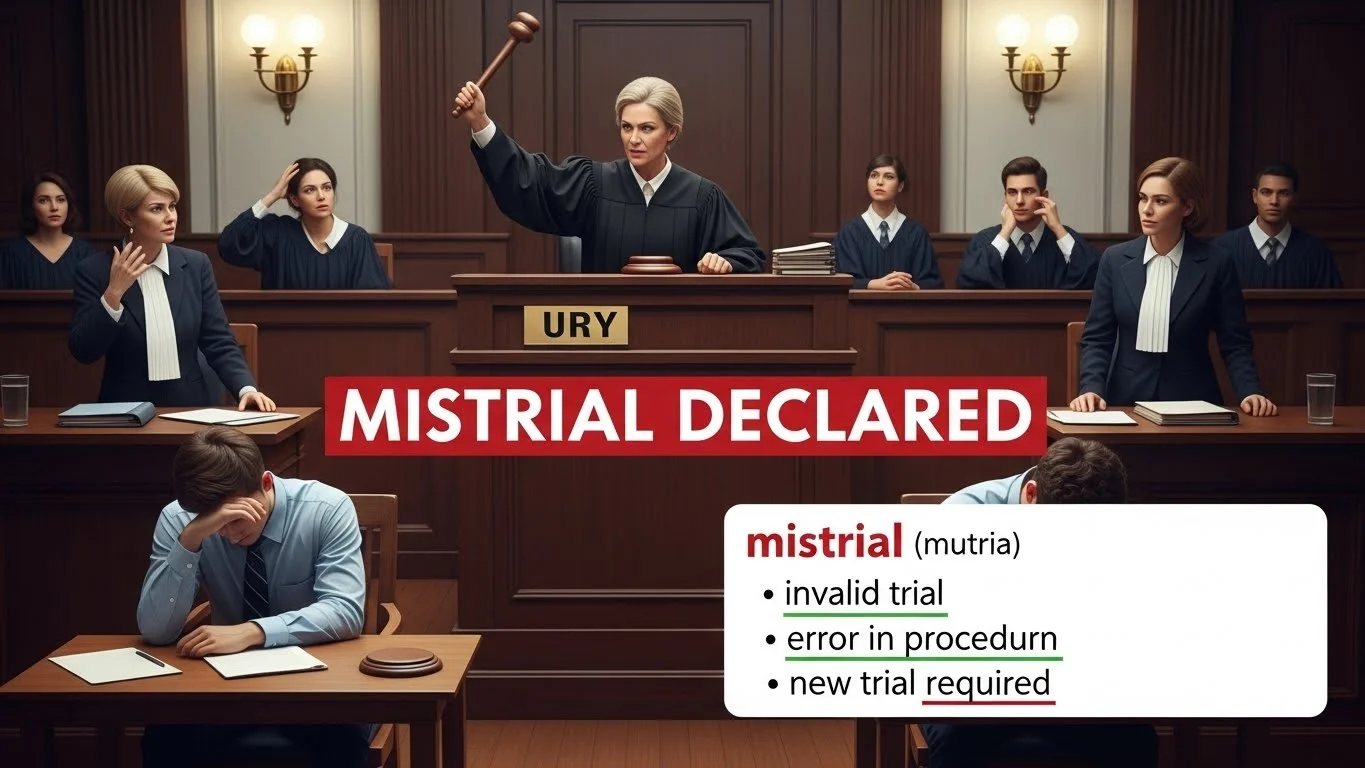
A mistrial means a trial that is stopped before it reaches a final verdict because something went wrong and the process is no longer fair or legal.
In simple words, a mistrial happens when:
The trial cannot continue properly
The jury cannot reach a decision
A serious legal error occurs
When a mistrial is declared, the trial ends without a guilty or not-guilty verdict.
Mistrial Meaning in Legal Terms
In legal language, a mistrial is declared when:
A defendant’s right to a fair trial is compromised
Jury misconduct occurs
Critical evidence is handled improperly
External events influence the jury
The goal is to protect fairness, not to punish either side.
Common Reasons for a Mistrial
A mistrial can happen for several reasons, including:
A hung jury (jurors can’t agree)
Improper statements made in court
Jury exposure to outside information
Witness misconduct
Prosecutorial or defense errors
Juror illness or death
Evidence being ruled inadmissible after presentation
Each reason affects the case differently.
What Is a Hung Jury?
A hung jury is one of the most common causes of a mistrial.
It happens when:
Jurors are split
No unanimous decision is possible
Further deliberation won’t change the outcome
In many courts, a hung jury almost automatically leads to a mistrial.
What Happens After a Mistrial?
After a mistrial, the case doesn’t just disappear.
Possible next steps include:
The prosecution retries the case
Charges are dropped
A plea deal is negotiated
The case is dismissed in rare situations
The decision depends on evidence strength, cost, and public interest.
Does a Mistrial Mean the Defendant Is Free?
No. A mistrial does not mean the defendant is innocent or released permanently.
Important points:
No verdict was reached
The case can usually be retried
Double jeopardy often does not apply
People often confuse mistrial with acquittal, but they are very different.
Mistrial vs Acquittal vs Dismissal
These legal outcomes are often mixed up.
Mistrial: Trial ends without a verdict
Acquittal: Defendant is found not guilty
Dismissal: Case is thrown out by the judge
Only an acquittal protects against retrial in most cases.
Who Can Declare a Mistrial?
A mistrial can be declared by:
The judge
On motion from the defense
On motion from the prosecution
However, the final decision always belongs to the judge.
Real-Life Examples of Mistrials
Examples include:
A juror discussing the case on social media
A witness mentioning banned evidence
A jury deadlock after long deliberation
A lawyer making an inflammatory statement
Even small mistakes can sometimes force a mistrial.
Is a Mistrial Common?
Mistrials are not rare, but they’re not everyday events either.
They occur more often in:
High-profile cases
Long trials
Cases with emotional testimony
Complex evidence situations
Courts try to avoid them, but fairness comes first.
Why Mistrials Matter in the Justice System
Mistrials exist to:
Protect defendants’ rights
Maintain legal integrity
Prevent unfair verdicts
Ensure due process
Although frustrating, they help prevent wrongful convictions.