
What Does Salsa Mean?
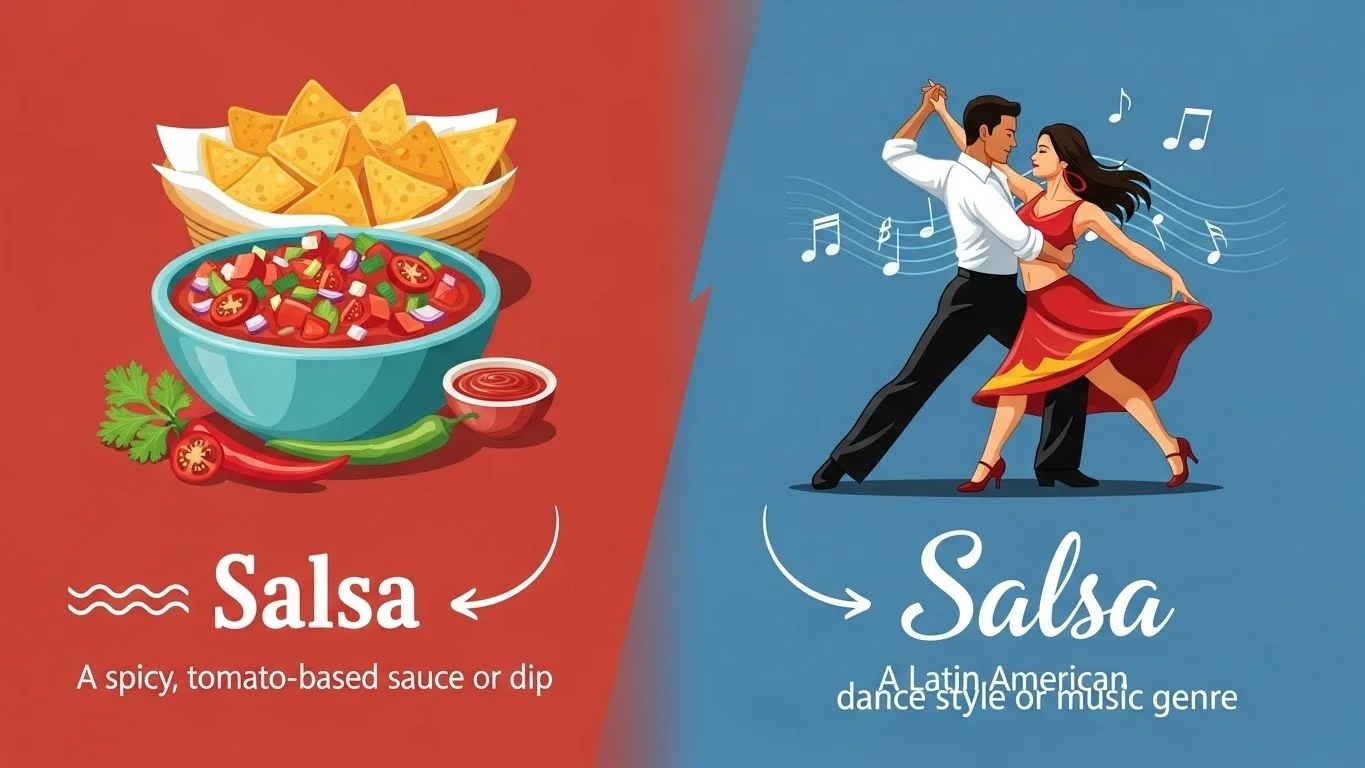
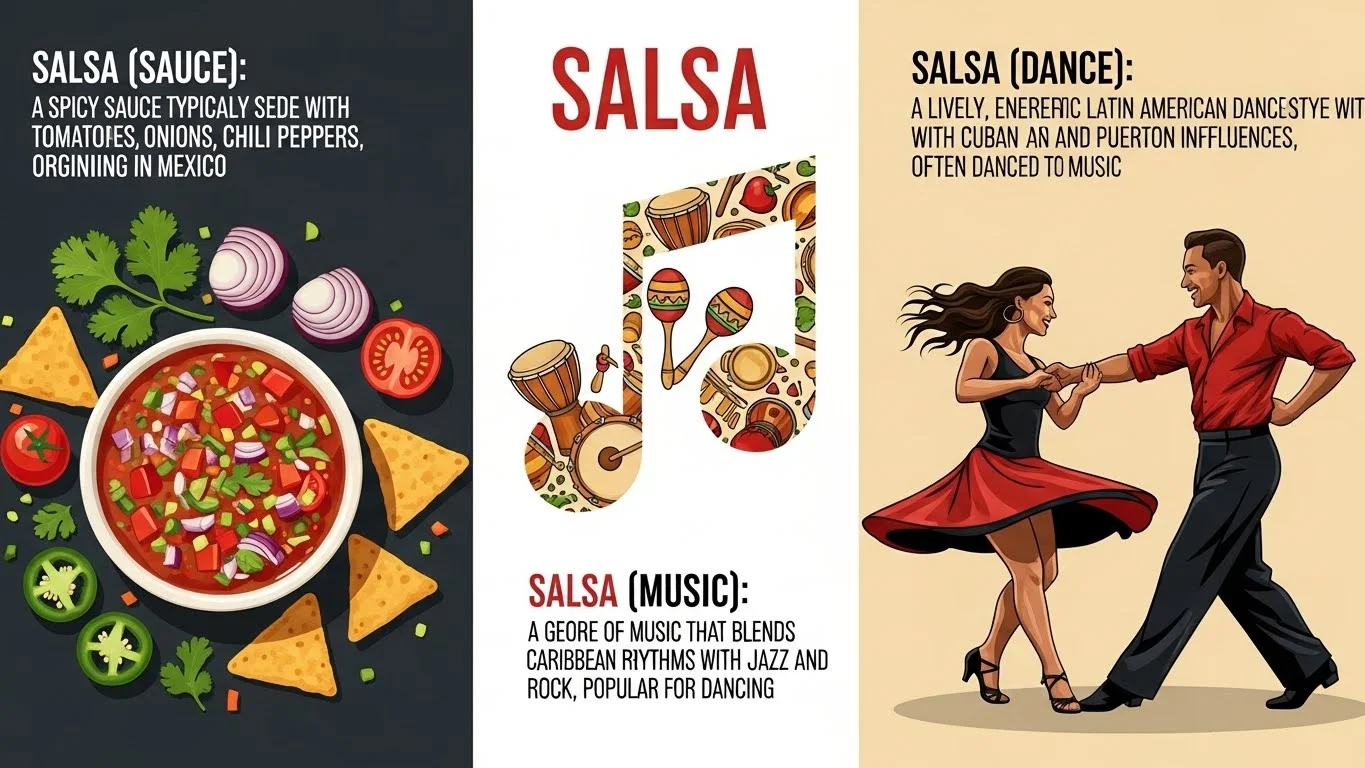
Salsa has multiple meanings:
Dance Style: A lively Latin American dance.
Music Genre: A rhythmic and energetic style of music that accompanies salsa dance.
Food: A spicy sauce used in Mexican cuisine.
The meaning depends on whether you’re talking about dancing, music, or food.
Salsa as a Dance
Salsa dance originated in Cuba and Puerto Rico and became popular worldwide.
Key points about salsa dance:
Fast-paced, rhythmic, and energetic
Usually performed with a partner
Includes spins, turns, and footwork patterns
Combines African and Latin American influences
Salsa dance symbolizes joy, passion, and cultural expression.
Salsa as Music
Salsa music is the sound that accompanies salsa dancing.
Characteristics include:
Latin rhythms and percussion
Strong bass and brass instruments
Influences from Cuban son, mambo, and jazz
Energetic and lively beats
Listening to salsa music can immediately inspire dancing and celebration.
Salsa as Food
Salsa sauce is a spicy or tangy condiment used in Mexican and Latin cuisine.
Common types:
Red salsa: Made from tomatoes and chili
Green salsa (salsa verde): Made from tomatillos and green chili
Pico de gallo: Fresh, chunky salsa with tomatoes, onions, and cilantro
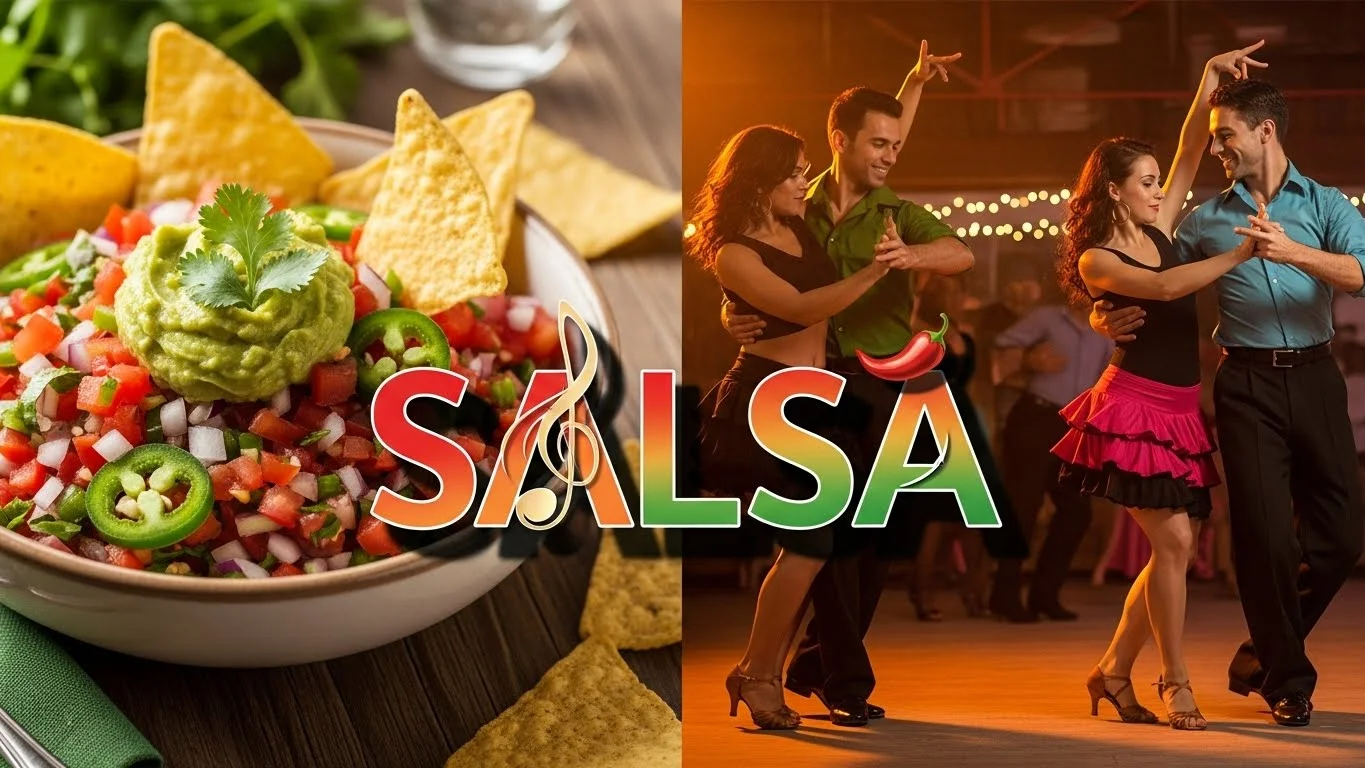
Salsa as food adds flavor and excitement to meals, just like salsa dance adds energy to music.
Origin of the Word Salsa
The word salsa literally means “sauce” in Spanish.
In music and dance, it reflects a mix of rhythms and styles, just like different ingredients in a sauce.
The term gained international popularity in the 1960s and 70s through New York’s Latin music scene.
How Salsa Is Used in Everyday Life
Dance classes: “I’m learning salsa this weekend.”
Music: “This band plays salsa music.”
Food: “I love adding salsa to my tacos.”
Context is key to understanding which meaning is intended.
Why Salsa Is Popular Worldwide
Dance: Fun, energetic, social
Music: Infectious rhythms, uplifting vibes
Food: Adds flavor and spice
Cultural symbol: Latin American heritage celebrated globally
Common Misunderstandings About Salsa
Salsa is only Cuban or Mexican (It’s pan-Latin, influences come from many regions)
Salsa is just a dance, not music (Music and dance are inseparable)
Salsa is extremely spicy (Some versions are mild)
Tips for Learning Salsa (Dance)
Take beginner-friendly classes
Focus on rhythm and timing
Watch tutorials online
Practice with a partner
Have fun and enjoy the music
Salsa is more about expression and enjoyment than perfection.